

Tree Work Isn’t A Clearing Activity
On most programs it appears once, near the start of the site works, between mobilization and earthworks. That placement is reasonable and it’s wrong, because it’s the only tree item on the chart.
The obligations in these ordinances are spread across the whole project, from before the layout is drawn to years after practical completion. What gets missed isn’t usually a task. It’s a dependency nobody wrote down.
The Survey Is A Design Input
It’s the item most often placed too late, and the consequences are the largest.
A survey establishes what’s protected, where it stands and what constraints attach to it. If a perimeter zone runs up to thirty feet onto the site along a residential boundary, or a floodplain cap limits what proportion may be altered, or a specimen tree can’t be touched without a director’s approval, those facts constrain the layout rather than the budget.
Delivered at concept they shape a plan. Delivered after one, they produce a redesign or an application that argues for something the ordinance won’t permit.
Where Each Item Actually Sits
Four points in a program, and only one of them is on site.
At Concept, Establish The Constraints.
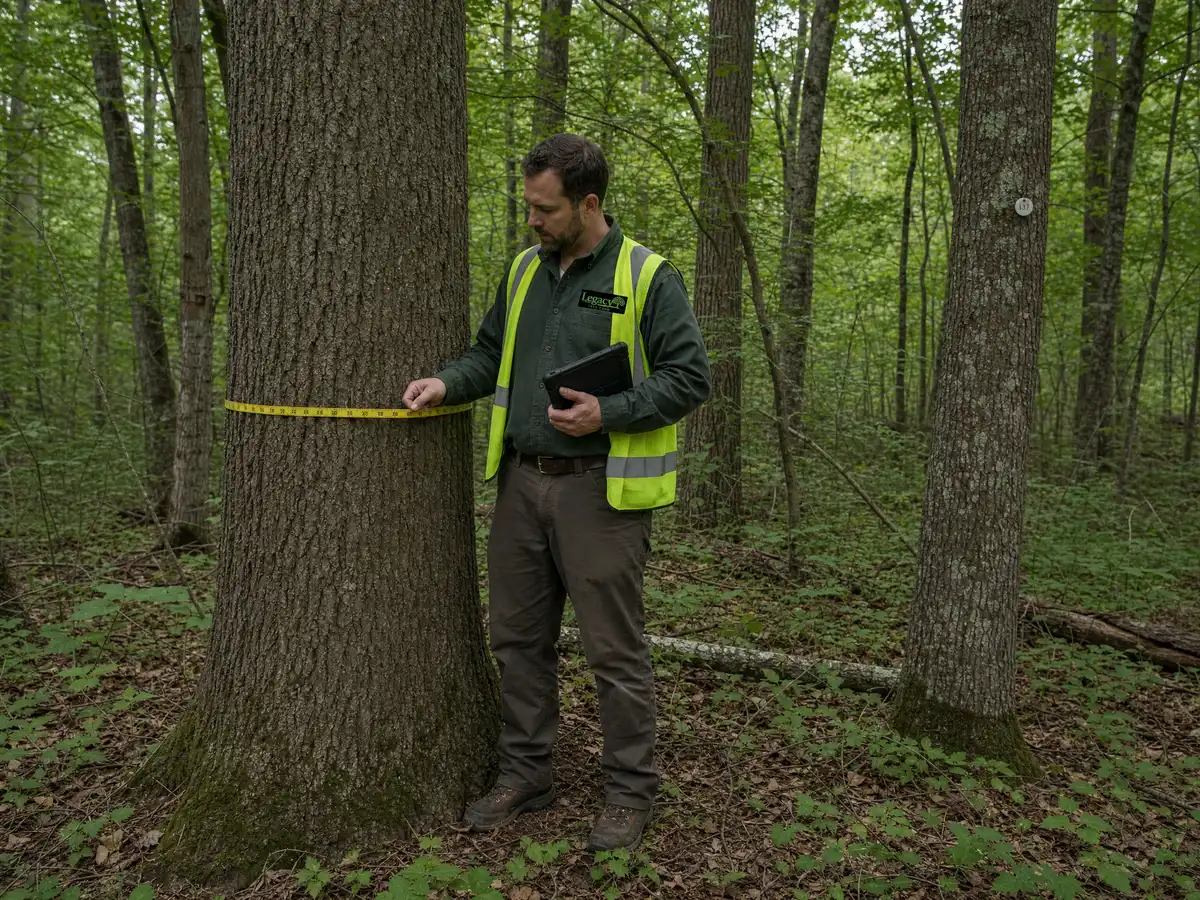
What’s protected, where, and which areas carry an outright prohibition. This is the point at which trees can still change the drawing cheaply, and the only point at which changing it’s cheap.
At Submission, The Plan Travels With It.
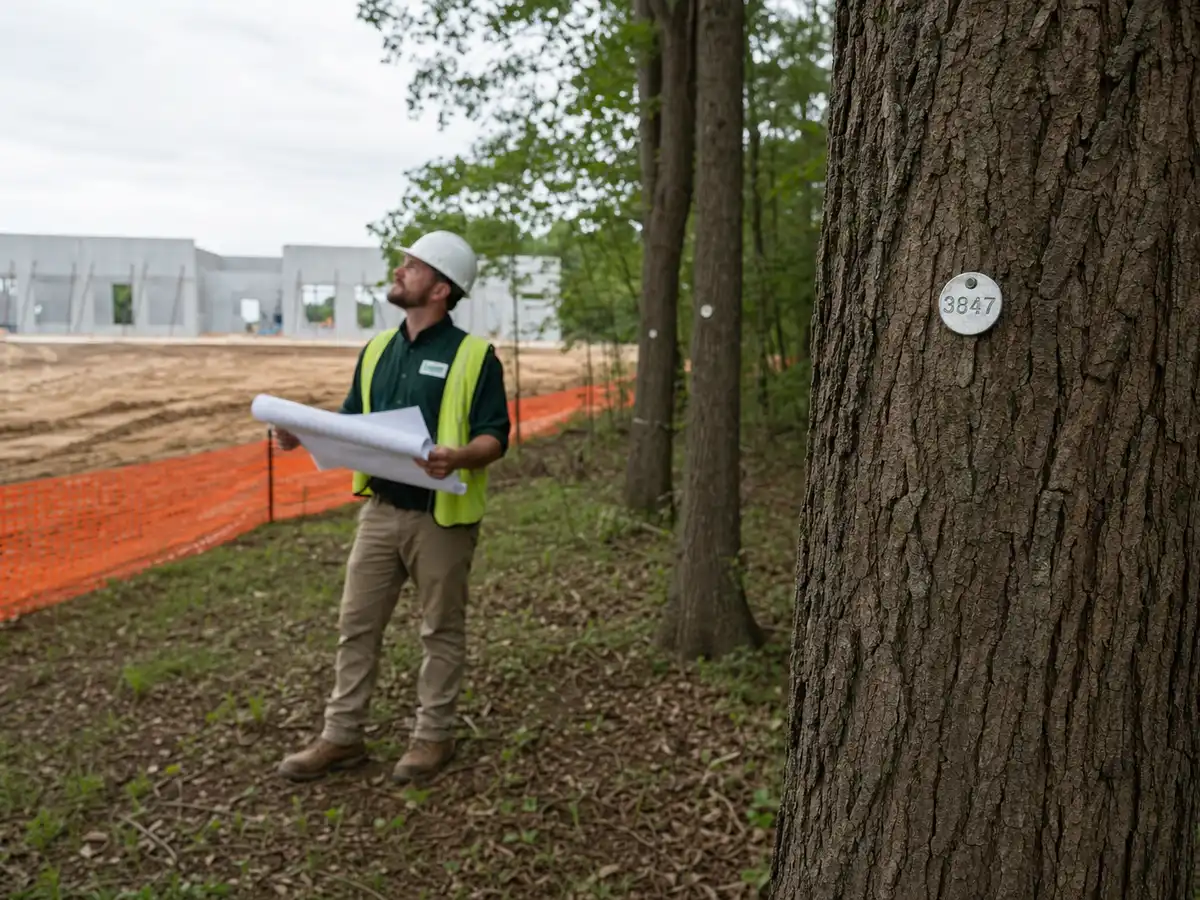
The preservation plan is a condition on the plat, the grading permit or the zoning case it accompanies. Returned for revision, it holds up whatever it’s attached to rather than holding up the trees.
Before Grading, Fence And Inspect.
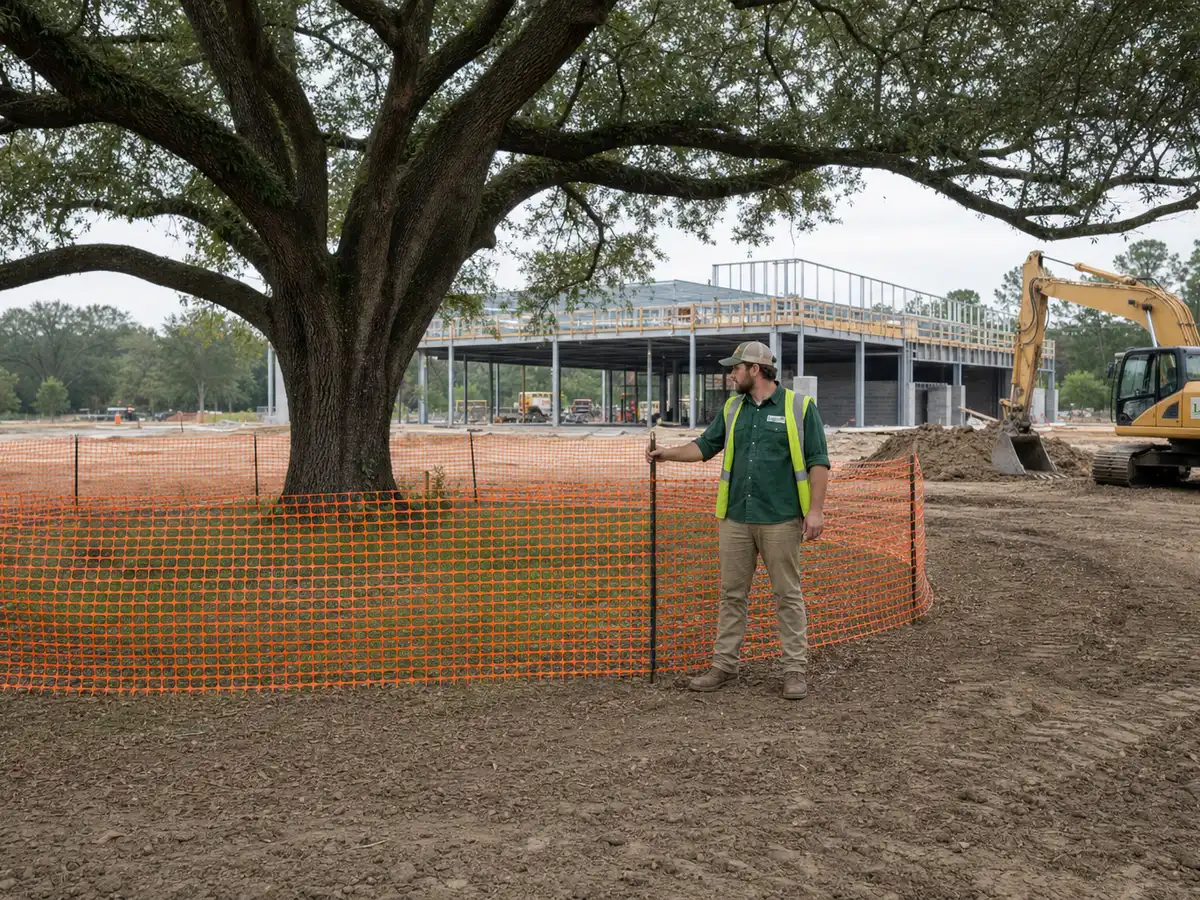
Frisco wants fencing installed and inspected before the pre-construction meeting or the grading permit. That makes it a predecessor to mobilization, and a grading permit held for a fence is an avoidable delay.
Pull The Permit Against The Phase
Allen is the reason this deserves its own line. Trees approved for removal must be completely off the site within 90 days of the permit date, extendable one time by 30, and if the work runs past that a new permit has to be applied for and issued before it can continue.
On a single-phase site that’s rarely a constraint. On a phased development, a permit pulled at the start of a two-year program has expired long before the phase that needed it, and the second application is a cost and a delay that a scheduling decision would have avoided entirely.
The Tail Nobody Owns
Two of these cities put obligations well past the end of the job. Carrollton’s survival period runs two years from project completion; Allen’s runs three under a mitigation agreement.
Those dates sit beyond practical completion and beyond most retention releases. The project team that created the obligation is gone before it matures, which is how a replacement commitment becomes a surprise for an owner who was never told it existed.
It costs nothing to hand over a note of what was planted, under what obligation, and when the period ends. It’s simply that nobody’s role includes doing it.
Assign The Items Or The Sequence Fails
The survey belongs to design. The plan belongs to the submission package. The fencing belongs to the earthworks contractor and needs an inspection booked. The survival period belongs to the owner and needs a date in a diary.
Spread across four parties with no single owner, it’s the sequence that fails rather than any one task, and every one of the failures is visible months in advance to anyone looking at the whole set together.
The Rest Of What The Rules Ask For
The provisions themselves, explained once rather than nine times: what counts as protected, what a permit is called here, and what has to exist before a tree comes out.
- Tree Ordinance Compliance Across Collin, Dallas And Denton Counties
- Tree Mitigation Plans And What A Removal Really Costs
- Tree Removal Permits And What Each City Actually Calls It
- What Counts As A Protected Tree And Where The Line Sits
- Tree Preservation Plans: What Goes In One And Who Signs It
- Tree Protection During Construction On Commercial Sites
- Paying A Fee Instead Of Planting Replacement Trees
- Who Approves A Tree Removal, And How A Refusal Is Appealed
- Perimeter Zones, Floodplain Limits And Protected Natural Areas
- Street Trees, Rights-Of-Way And Trees On Public Property
- Tree Due Diligence Before You Buy Or Lease A Site
- When Tree Work Belongs In A Construction Schedule
- Tree Rules On An Operating Property, With No Construction
- Ordinances Get Amended, And The Version Matters
- Tree Ordinance Rules In HOA Common Areas
- Screening, Buffers And The Trees That Have To Stay
- Putting Tree Protection In A Contractor Scope Of Work
- Parking Lots, Paving And The Trees Underneath Them
- Storm Removals And What The Ordinance Still Wants After
- Trees In Easements And Who Actually Controls Them
- Choosing Replacement Trees, And Why Species Caps Exist
- Tree Ordinance Terms, Translated Into Plain Language
- How To Find Out Which Tree Rules Apply To Your Site
- See All City Tree Ordinances