

Clearing Is A Compliance Job With Machines Attached
The physical work is straightforward and most contractors can do it. What separates an expensive clearing job from an ordinary one is almost never the machinery.
It’s that a tree removed in ten minutes can carry an obligation that takes months to settle, and the machine operator has no way of knowing which trees those are unless somebody established it first and marked it on the ground.
What Happens Before Anything Starts
Three steps, all of them cheap, and all of them impossible to do afterwards.
What's Protected Is Established
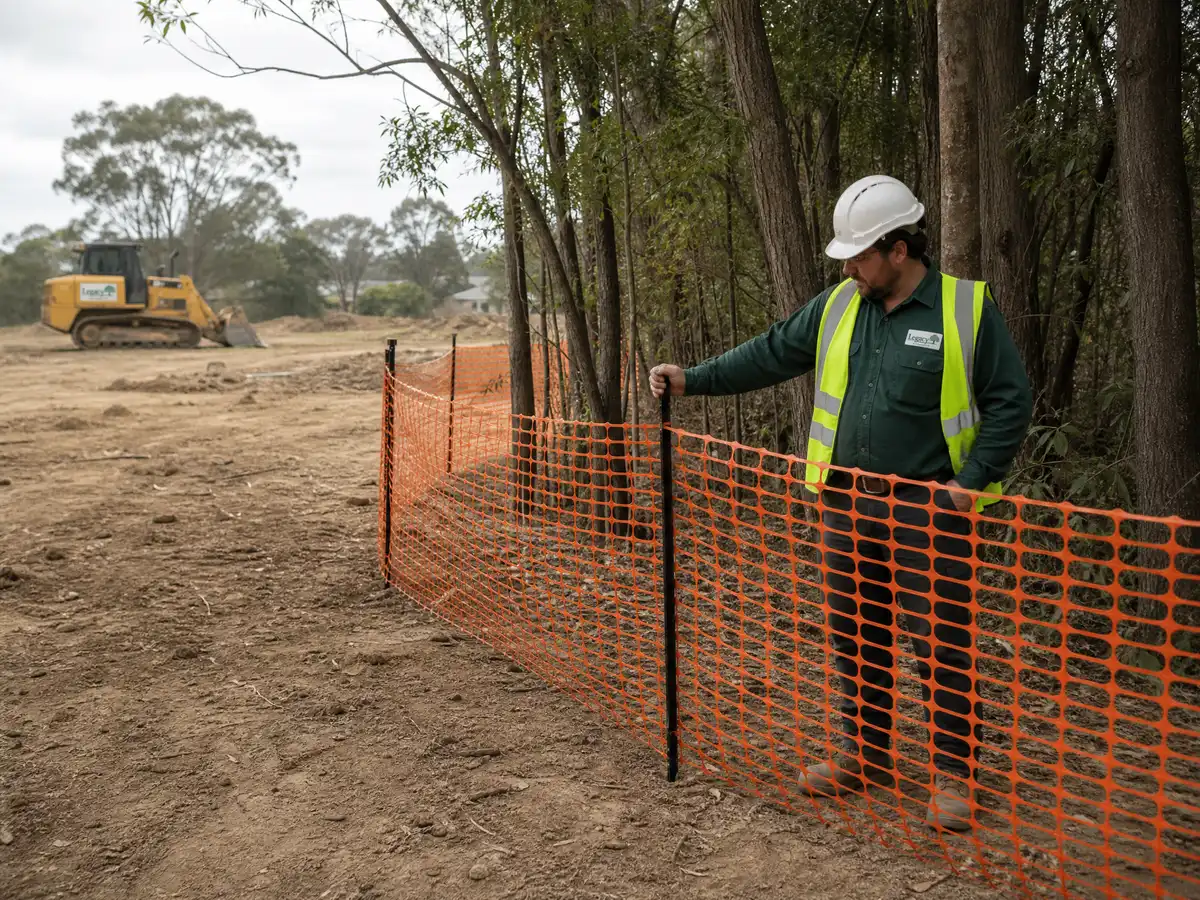
Which trees the ordinance protects, which sit in a zone where removal is prohibited outright, and which the approved plan committed to keeping. That’s a survey question and it’s answered before a machine is booked.
The Keepers Are Fenced
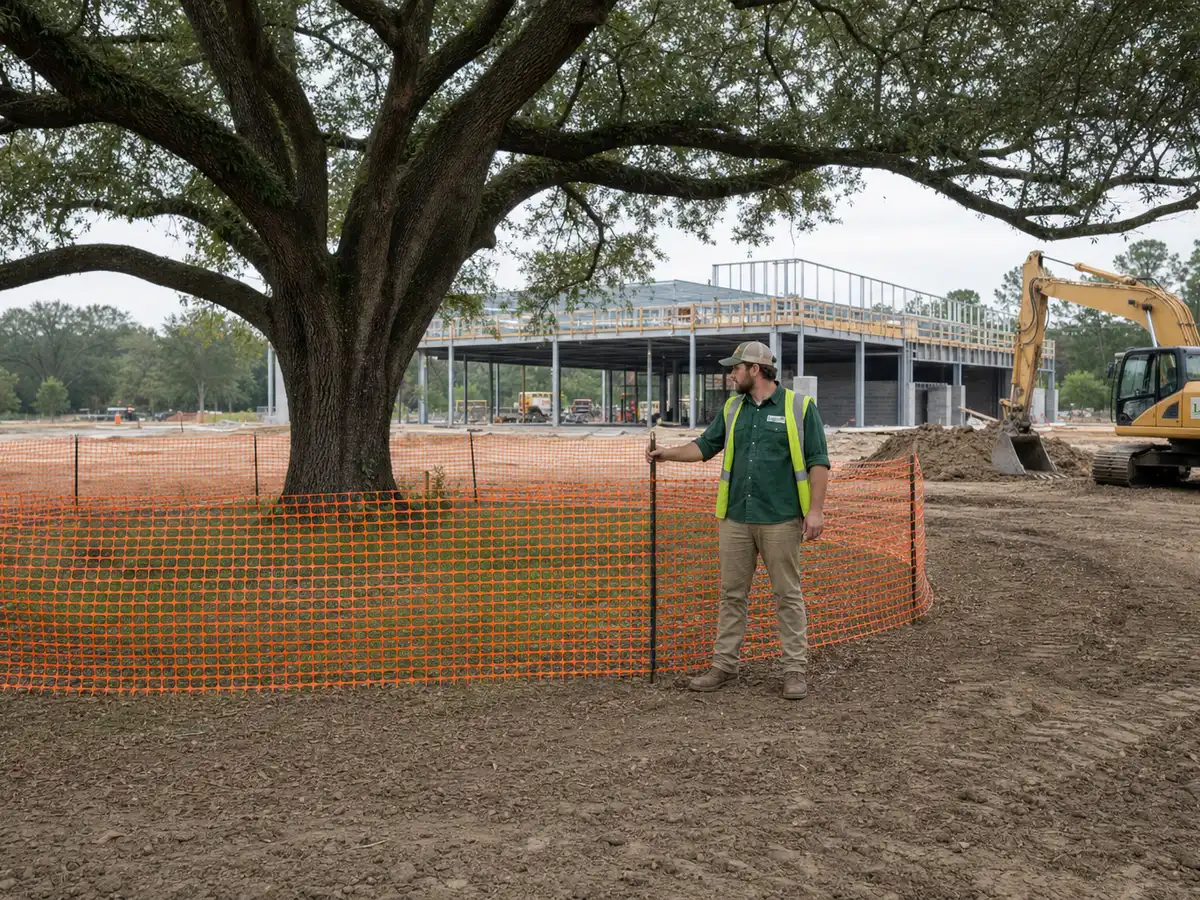
Fencing at the drip line, installed before grading rather than after, and in some cities inspected before the grading permit is issued. A tree marked only on a drawing is a tree that gets driven over.
Material Is Sorted, Not Buried.
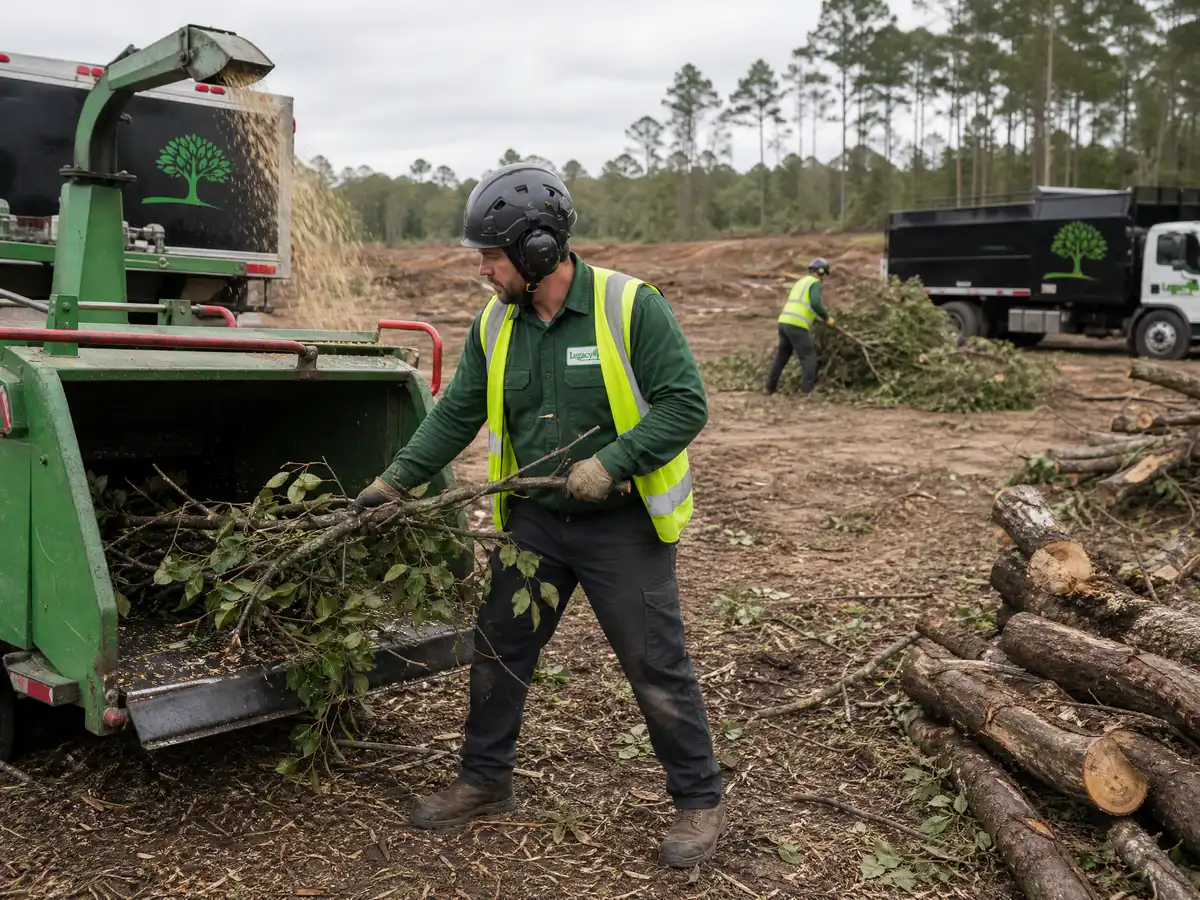
Chip, timber and stumps have different destinations and different costs. Deciding that in advance is what keeps disposal from becoming the largest line on the invoice.
The Trees You Can’t Simply Pay For
Most protected trees are a price. A few aren’t, and those are the ones that turn a clearing job into a redesign.
A perimeter zone along a boundary with existing residential can prohibit alteration outright rather than pricing it. A floodplain can cap the proportion of protected trees that may be touched. A specimen tree above a threshold may need a director’s approval that no fee substitutes for.
None of those are discoverable from the site itself, and all of them are knowable in advance. Where the absolute constraints sit covers them in full, and they’re the reason clearing gets scoped from the ordinance rather than from the boundary line.
Selective Clearing Is Usually Worth Pricing
Total clearance is simpler to quote and it isn’t always cheaper once the whole picture is counted.
Retaining mature trees earns preservation credit in several cities here, and in one it runs a ledger where preserving offsets removing. Trees kept at a boundary can satisfy a screening requirement the site would otherwise have to plant. And mature canopy on a finished commercial property is worth more than anything you can put back inside twenty-five years.
Set against that, working around retained trees costs more per acre and slows the machines down. Sometimes total clearance genuinely wins. The point is that it’s an arithmetic question with a defensible answer, not a default.
What Happens To The Material
Cleared material is bulk, and bulk is expensive to move. On a site of any size the disposal decision is a real cost item rather than a detail at the end of the scope.
Brush is chipped on site, and the chips either leave with us or stay if you want them for beds or trails. Anything too big for the chipper gets hauled off whole. We don’t sort material for resale, and chipping is what keeps the disposal cost down, because volume is what you pay for at the disposal site. Stumps are the awkward category and their handling depends entirely on what the ground becomes next.
Burying material on site is the one answer to avoid. It’s a settlement problem for whoever builds there, and it arrives years later as ground that won’t hold a surface.
Phasing Beats Clearing Everything At Once
On a site being developed in stages, clearing the whole parcel at the start is the instinctive move and it’s rarely the efficient one.
Bare ground erodes, needs stabilizing, and generates silt control obligations for however long it sits open. Ground still carrying vegetation does none of those things. Clearing a phase when that phase is ready keeps the rest of the site quiet, and on a project running over a couple of years that difference is measured in truckloads of imported material.
It also keeps options open. A tree still standing in phase three can still be designed around, and one cleared in year one to tidy the site can’t. That’s a decision worth making deliberately rather than by default.
Who We Work With On This
Usually the civil engineer or the general contractor, and usually earlier than they expect to hear from a tree company.
The useful moment is while the site plan is still being drawn, because that’s when a protected tree can still change the layout at no cost. By the time clearing is scheduled, the constraints are fixed and the only remaining question is how carefully they’re respected on the day.
We’d rather do the survey and the clearing than only the clearing, not for the fee but because the second one without the first is where the expensive surprises come from.
The Rest Of What We Do
Eleven services for commercial property. Most sites need two or three.
- Commercial Tree Removal
- Commercial Tree Trimming and Pruning
- Emergency Tree Service
- Crane Assisted Tree Removal
- Commercial Stump Grinding and Removal
- Commercial Tree Cabling and Bracing
- ISA Certified Arborist Consulting
- Commercial Tree Health Care
- Tree Survey and Preservation Plans
- See All Commercial Tree Services