

A Tree Ordinance Isn’t A Fixed Thing
It reads like one. It’s published, numbered, and it sits in a code that looks permanent. These codes move, and in this market several have moved recently.
Frisco’s tree preservation subsection was amended by an ordinance adopted in July 2021 and again by one adopted in May 2024. Dallas’s Article X was amended in June 2018. Allen’s provisions carry ordinance references from 2001 and 2007. Wylie’s zoning article carries a June 2023 date.
None of that is unusual for municipal code. It only becomes a problem when somebody treats a figure learned on a previous project as a fact about the city.
Which Version Governs Your Site
Broadly, the version in force when an approval was granted governs what that approval requires, and the current version governs anything new.
Which means a property can be living under two sets of rules at once: obligations calculated under an older text, and any new work measured against today’s. On a site with a mitigation agreement still running, the agreement reflects the arithmetic of its own moment, and the current table may compute a different number entirely.
That’s a reason to keep the approved documents rather than only the outcome. The plan records which version you were answering.
How Wrong Numbers Travel
Not by anyone lying. By one source copying another, and nobody opening the article.
Read The Article, Not The Summary.
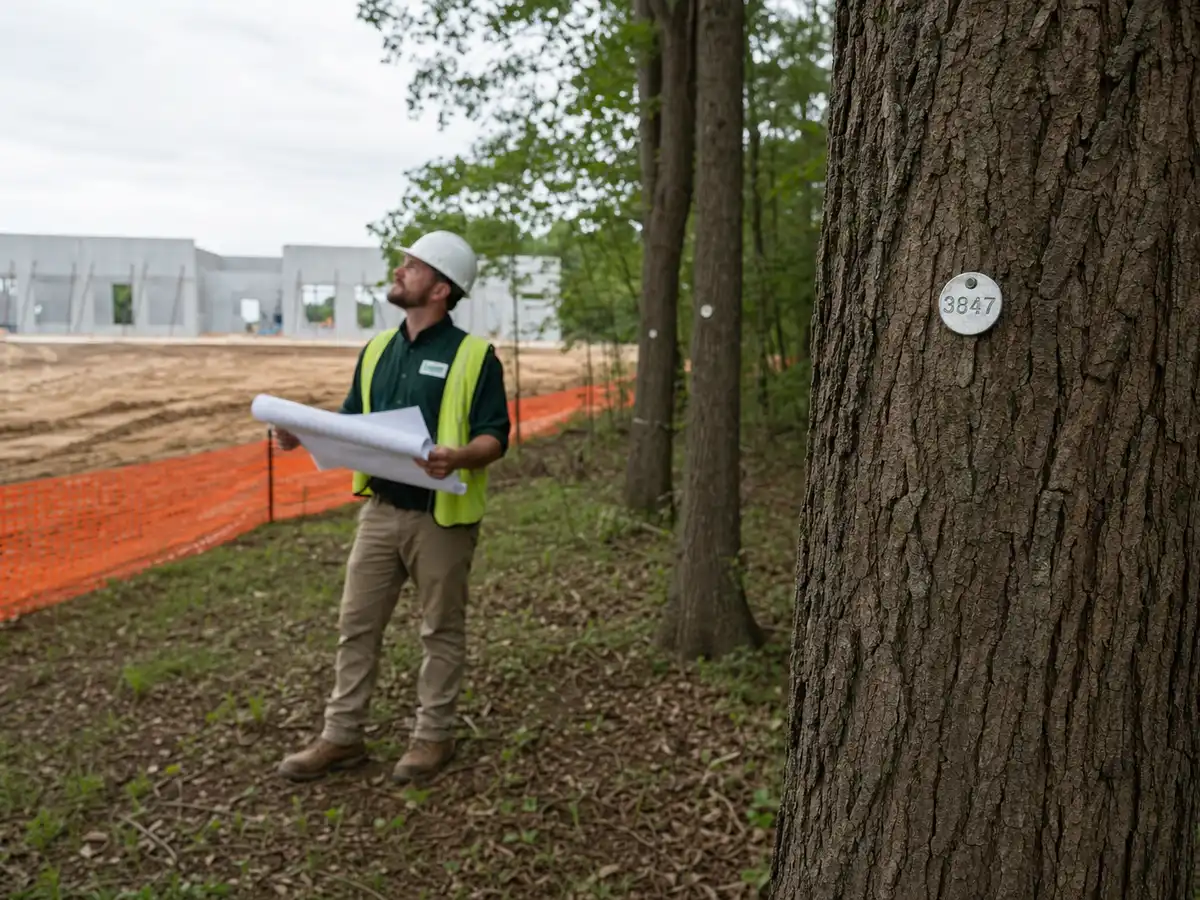
The replacement figure most repeated about Plano is wrong for large trees, and it circulates widely because summaries copy summaries. The article itself takes ten minutes and settles it.
Check What The Measurement Is

Diameter at breast height and caliper are different numbers on the same trunk. We had that wrong about Frisco for three days, on a live page, until a source check caught it. Different word, different obligation.
Keep The Superseded Copy

When a city amends, the new text goes beside the old one with a date rather than over it. Claims were made under the previous version, and deleting the source deletes the evidence for what was said.
What We Got Wrong, And How.
Two claims about Frisco were wrong on this site for three days and reached the live city page before a source check found them.
The first was the measurement: the ordinance works in diameter at breast height, taken four and a half feet above natural ground level, and the site was quoting caliper, a nursery measurement taken lower on the trunk. Different figure on the same tree.
The second was worse. The replacement table was described as three bands when it has four, topping out at 300% for the largest trees. The three-band version came from a worked example in a checklist rather than from the ordinance table, and it understated the obligation on exactly the trees where the obligation is heaviest.
Both are corrected. They’re described here because a page about version discipline that claimed a clean record would be making the same mistake it’s warning about.
The Check Worth Building In
Treat a tree ordinance the way a building code gets treated: current at a date, confirmed at the start of each project, cited with a version.
In practice that means going to the city’s canonical published source rather than a summary, reading the amendment references that sit with the section, and writing the date down next to whatever figure you took from it.
It’s one check at the beginning of a project instead of a correction at the end of one, and it removes an entire category of error that otherwise looks exactly like competence right up until it doesn’t.
The Rest Of What The Rules Ask For
The provisions themselves, explained once rather than nine times: what counts as protected, what a permit is called here, and what has to exist before a tree comes out.
- Tree Ordinance Compliance Across Collin, Dallas And Denton Counties
- Tree Mitigation Plans And What A Removal Really Costs
- Tree Removal Permits And What Each City Actually Calls It
- What Counts As A Protected Tree And Where The Line Sits
- Tree Preservation Plans: What Goes In One And Who Signs It
- Tree Protection During Construction On Commercial Sites
- Paying A Fee Instead Of Planting Replacement Trees
- Who Approves A Tree Removal, And How A Refusal Is Appealed
- Perimeter Zones, Floodplain Limits And Protected Natural Areas
- Street Trees, Rights-Of-Way And Trees On Public Property
- Tree Due Diligence Before You Buy Or Lease A Site
- When Tree Work Belongs In A Construction Schedule
- Tree Rules On An Operating Property, With No Construction
- Ordinances Get Amended, And The Version Matters
- Tree Ordinance Rules In HOA Common Areas
- Screening, Buffers And The Trees That Have To Stay
- Putting Tree Protection In A Contractor Scope Of Work
- Parking Lots, Paving And The Trees Underneath Them
- Storm Removals And What The Ordinance Still Wants After
- Trees In Easements And Who Actually Controls Them
- Choosing Replacement Trees, And Why Species Caps Exist
- Tree Ordinance Terms, Translated Into Plain Language
- How To Find Out Which Tree Rules Apply To Your Site
- See All City Tree Ordinances