

Replacement Planting Gets Specified Backwards
A mitigation obligation arrives as a number of caliper inches. The quickest way to satisfy it’s to find a species that’s available at the required size, priced sensibly, and plant a lot of it.
That’s how the schedule usually gets written, and it’s how a region ends up concentrated in a handful of species. The obligation is measured in inches, so inches are what gets optimized, and diversity is nobody’s line item.
One City Writes The Cap Into The Code
Garland caps any single species at thirty percent of the replacements. It’s a modest-looking constraint with a serious purpose, and among these nine ordinances it’s unusual.
The reason is straightforward. A planting that’s uniform is uniformly vulnerable, and this region has watched single-species street plantings fail together before. A monoculture replacement scheme discharges an obligation now and creates the conditions for the same obligation again later, at the owner’s cost rather than as part of a project.
The Local Numbers Say This Is Live
From Plano’s published urban forest assessment, which measured the actual canopy rather than describing trees in general.
One Species Already Over The Line

The assessment reports urban foresters recommending no more than 10% of a population in any single species. Sugarberry was measured at 15.5%, with cedar elm at 12.2% and American elm at 9.8% behind it.
A Canopy That's Mostly Young

64.4% of trees measured were under six inches in diameter. A young canopy is a canopy without much redundancy, and it takes decades rather than seasons to acquire any.
Shade As An Operating Cost
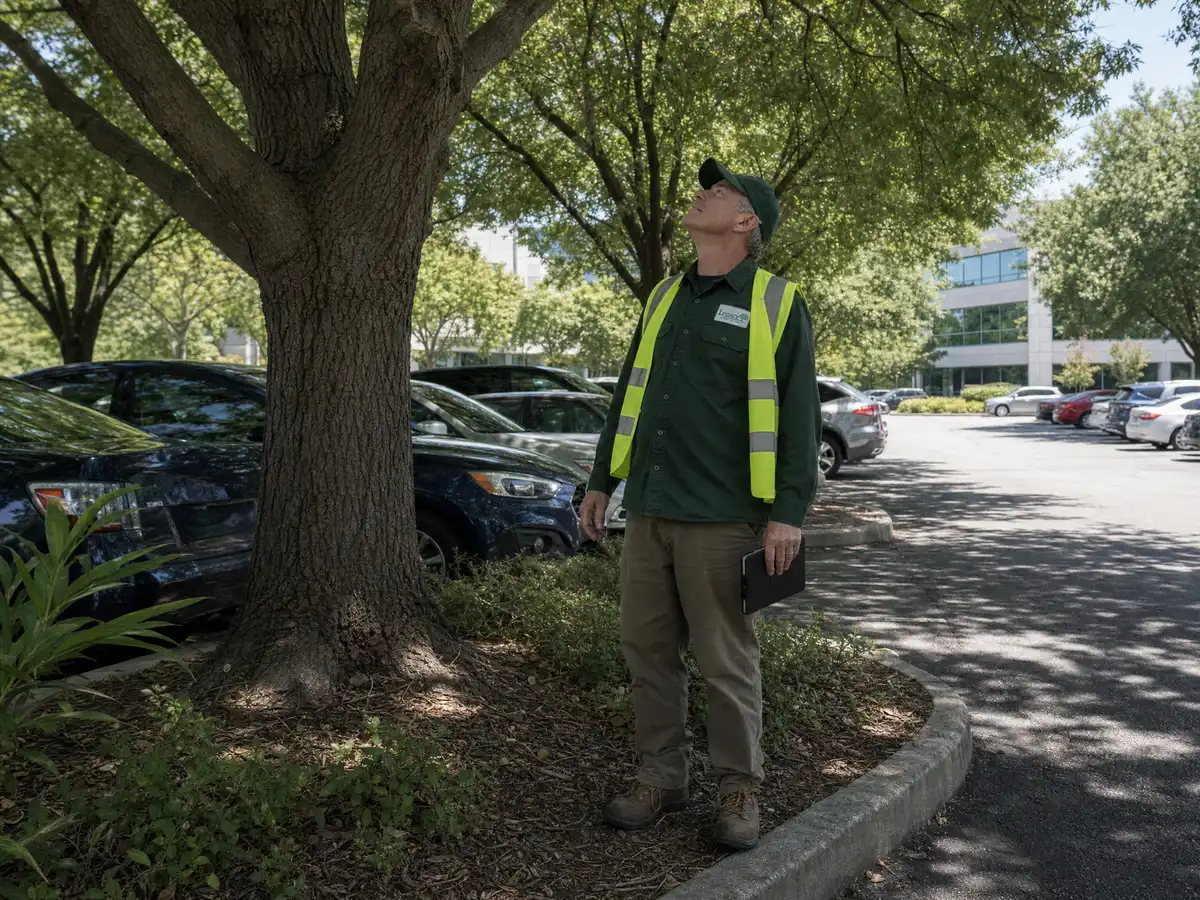
The same assessment values building energy savings at $1.86 million a year city-wide and pollution removal at 337 tons annually, worth $1.73 million. Canopy is a running cost item, not decoration.
Meeting The Ordinance Isn’t The Same As Getting It Right
Garland’s thirty percent cap is looser than the ten percent guideline the Plano assessment cites. A scheme can comply fully with the strictest diversity rule in this market and still be three times more concentrated than good practice recommends.
That gap is worth naming, because compliance is frequently treated as the standard. On a large replacement obligation, planting to the guideline rather than to the cap costs very little more and produces a planting that’s still there in thirty years.
Where The City Narrows The Choice
Several cities take the decision partly out of your hands, which is often helpful.
Frisco requires replacement stock from the city’s own recommended canopy shade tree list, at a three-inch caliper minimum, with street trees at three and a half and replaced by the adjacent property owner. Carrollton scales minimum stock by the size of the tree removed. McKinney specifies caliper and height together.
Those constraints interact. A required species list, a minimum caliper and a diversity cap applied at once can determine a planting schedule almost completely, which is a much better thing to discover while specifying than while procuring.
Mature Size Is The Decision Nobody Makes
The factor that decides whether a replacement tree is still there in twenty years usually isn’t species fashion or nursery price. It’s whether the space can hold what the tree becomes.
A large shade tree specified into a narrow island or under a service run produces a decade of clearance pruning followed by an early removal. That removal restarts the obligation rather than settling it, and the second planting inherits the same constraint that killed the first.
Matching mature form to available space is unglamorous, it’s free at specification stage, and it’s the difference between mitigation planting that becomes canopy and mitigation planting that becomes a maintenance line.
The Rest Of What The Rules Ask For
The provisions themselves, explained once rather than nine times: what counts as protected, what a permit is called here, and what has to exist before a tree comes out.
- Tree Ordinance Compliance Across Collin, Dallas And Denton Counties
- Tree Mitigation Plans And What A Removal Really Costs
- Tree Removal Permits And What Each City Actually Calls It
- What Counts As A Protected Tree And Where The Line Sits
- Tree Preservation Plans: What Goes In One And Who Signs It
- Tree Protection During Construction On Commercial Sites
- Paying A Fee Instead Of Planting Replacement Trees
- Who Approves A Tree Removal, And How A Refusal Is Appealed
- Perimeter Zones, Floodplain Limits And Protected Natural Areas
- Street Trees, Rights-Of-Way And Trees On Public Property
- Tree Due Diligence Before You Buy Or Lease A Site
- When Tree Work Belongs In A Construction Schedule
- Tree Rules On An Operating Property, With No Construction
- Ordinances Get Amended, And The Version Matters
- Tree Ordinance Rules In HOA Common Areas
- Screening, Buffers And The Trees That Have To Stay
- Putting Tree Protection In A Contractor Scope Of Work
- Parking Lots, Paving And The Trees Underneath Them
- Storm Removals And What The Ordinance Still Wants After
- Trees In Easements And Who Actually Controls Them
- Choosing Replacement Trees, And Why Species Caps Exist
- Tree Ordinance Terms, Translated Into Plain Language
- How To Find Out Which Tree Rules Apply To Your Site
- See All City Tree Ordinances