

A Small Vocabulary That Decides Real Money
Tree ordinances run on about a dozen terms. They look like jargon and they behave like arithmetic, because most of them are inputs to a number somebody is going to owe.
The difficulty is that several mean different things in different cities, and the words don’t announce it. Two codes eight miles apart can use the same phrase for materially different requirements.
The Terms Worth Knowing
| Term | What It Refers To |
|---|---|
| DBH | Diameter at breast height, taken four and a half feet above natural ground level |
| Caliper | Trunk diameter measured low on the stem, the unit nursery stock is sold in. A larger figure than DBH on the same tree |
| Protected tree | The threshold at which the ordinance applies, set by size and sometimes by species |
| Specimen, significant or quality tree | Tiers above protected, carrying stronger rules and fewer available waivers |
| Critical alteration | McKinney’s framing: damage and disturbance count alongside removal |
| Critical root zone | The protected ground around a trunk, computed differently by city |
| Drip line | The ground line beneath the outer edge of the canopy |
| Mitigation | What’s owed for a removal, in planting, credits or cash |
| Fee in lieu | Money paid to the city instead of replacement planting |
| Perimeter tree zone | A strip near a sensitive boundary carrying stronger or absolute protection |
Three Places The Same Word Diverges
Each of these has cost somebody a resubmission or a wrong number.
Caliper Against DBH

Two units for one trunk, and the ordinance decides which applies. Quoting caliper where the code says DBH overstates the tree, and the mistake survives review because both figures look plausible.
Radius Against Diameter
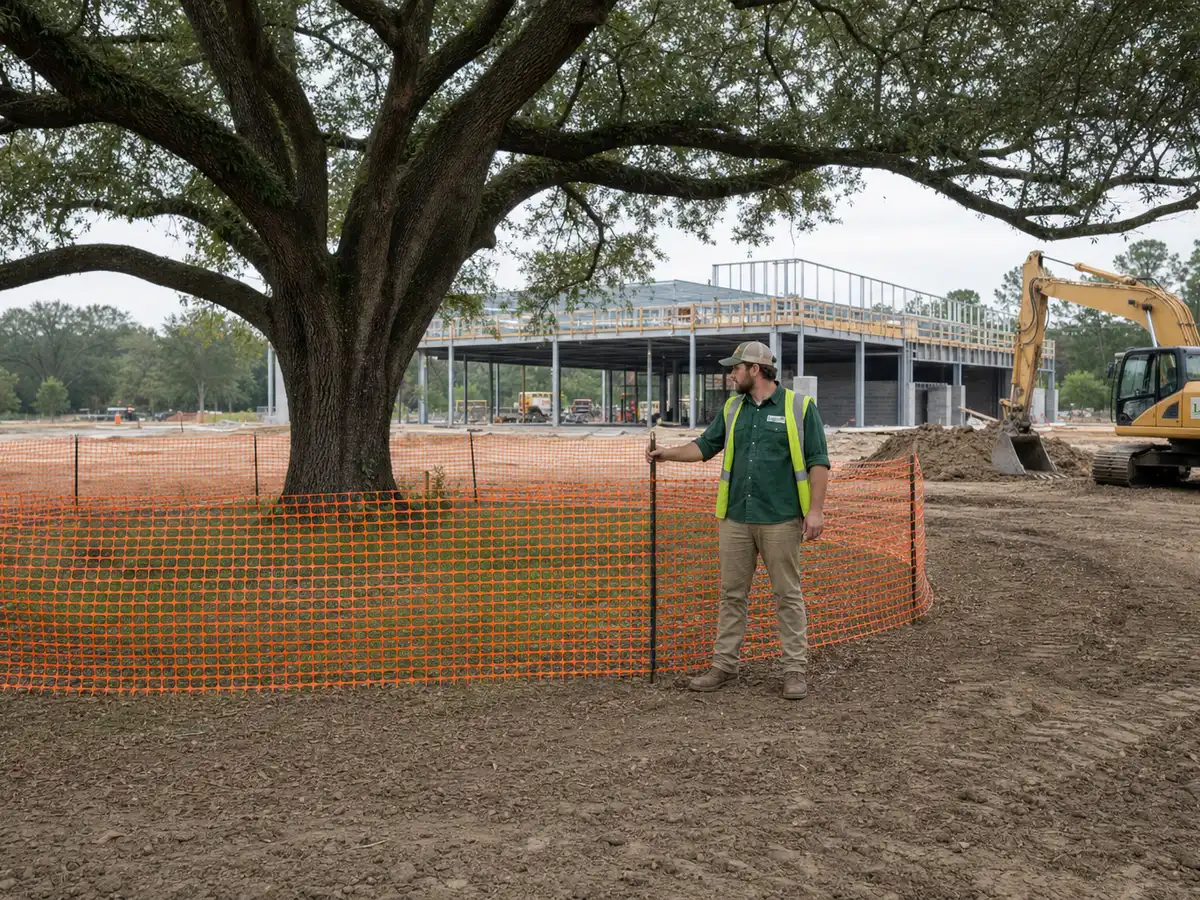
Garland computes its zone in diameter per inch of caliper and Plano in radius per inch of DBH. Same sentence structure, four times the area, and fencing built to the wrong one lands in the wrong place.
Removal Against Alteration
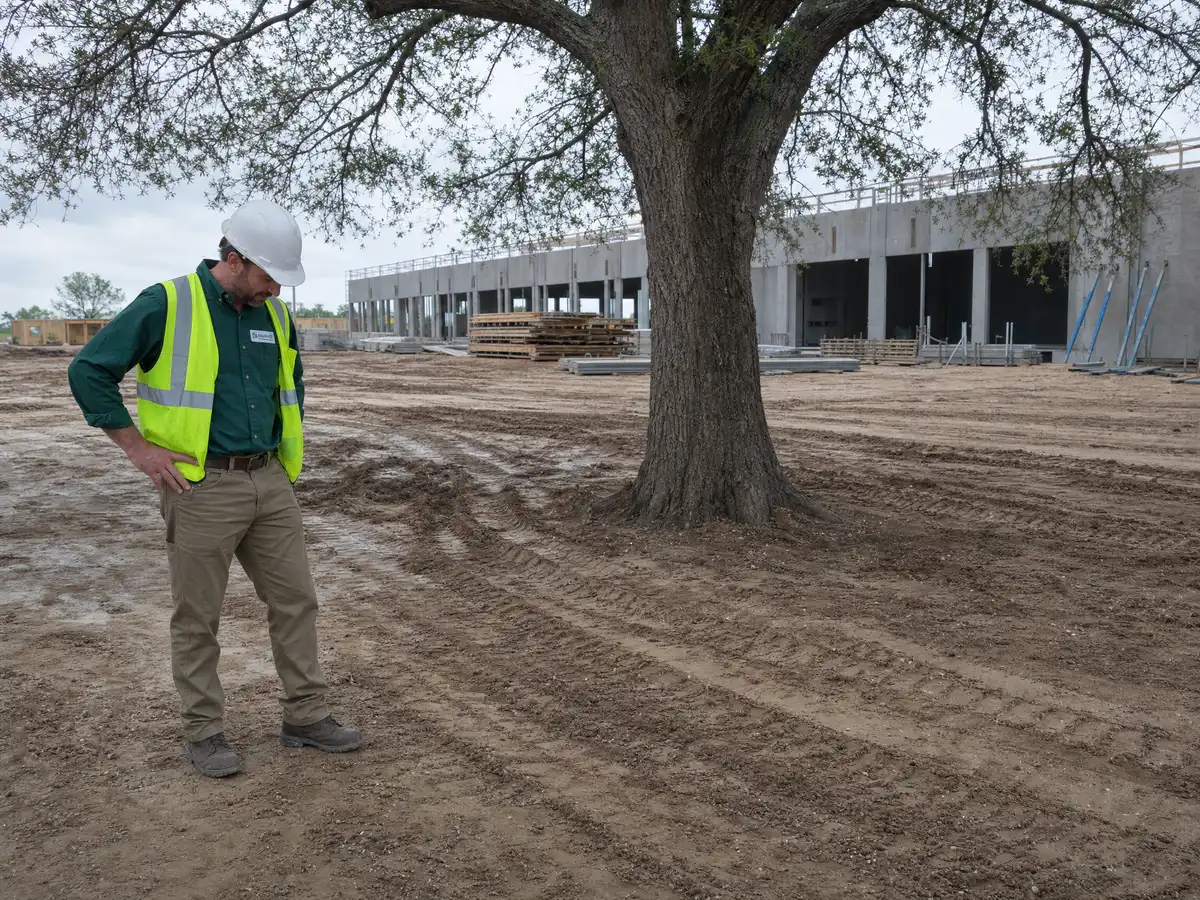
Where a code prohibits critical alteration rather than removal, nothing has to be cut for the provision to apply. Compaction, trenching and grade change all land inside it.
Why The Tiers Exist
Protected is a floor. Above it, most of these cities create at least one category with stronger treatment, and those categories are where the exceptions stop.
McKinney runs quality trees at six and twenty-seven inches and a Specimen Tree at forty-two, which can’t be critically altered at all without the Director of Planning’s approval. Dallas’s significant trees are excluded from its mitigation waiver entirely, whatever else that waiver covers.
The practical reading is that generous provisions tend to be written for ordinary trees, and the largest ones on a site are usually outside them.
Terms That Describe Money
Mitigation, credits and fee in lieu all name the same underlying question: what does this removal cost.
Mitigation is the obligation. Credits are the mechanism in cities that let preservation offset removal rather than computing a flat ratio. A fee in lieu converts the obligation to cash, priced in Garland at one hundred and fifty dollars per diameter inch.
Reading a code, it’s worth identifying which of the three it uses before working through the detail, because it determines whether the answer is a planting schedule, a running balance or an invoice.
When The Word Is Doing Unusual Work
The most expensive misunderstandings here aren’t obscure terms. They’re ordinary ones used precisely.
“Injure” carrying the same penalty as remove. “Alteration” including compaction. “Buildable area” defining trees out of protection rather than exempting them. None of those read as technical language, and each changes what a property owes.
Where a sentence in one of these codes seems to be laboring a distinction, it usually is, and the distinction is usually the point.
The Rest Of What The Rules Ask For
The provisions themselves, explained once rather than nine times: what counts as protected, what a permit is called here, and what has to exist before a tree comes out.
- Tree Ordinance Compliance Across Collin, Dallas And Denton Counties
- Tree Mitigation Plans And What A Removal Really Costs
- Tree Removal Permits And What Each City Actually Calls It
- What Counts As A Protected Tree And Where The Line Sits
- Tree Preservation Plans: What Goes In One And Who Signs It
- Tree Protection During Construction On Commercial Sites
- Paying A Fee Instead Of Planting Replacement Trees
- Who Approves A Tree Removal, And How A Refusal Is Appealed
- Perimeter Zones, Floodplain Limits And Protected Natural Areas
- Street Trees, Rights-Of-Way And Trees On Public Property
- Tree Due Diligence Before You Buy Or Lease A Site
- When Tree Work Belongs In A Construction Schedule
- Tree Rules On An Operating Property, With No Construction
- Ordinances Get Amended, And The Version Matters
- Tree Ordinance Rules In HOA Common Areas
- Screening, Buffers And The Trees That Have To Stay
- Putting Tree Protection In A Contractor Scope Of Work
- Parking Lots, Paving And The Trees Underneath Them
- Storm Removals And What The Ordinance Still Wants After
- Trees In Easements And Who Actually Controls Them
- Choosing Replacement Trees, And Why Species Caps Exist
- Tree Ordinance Terms, Translated Into Plain Language
- How To Find Out Which Tree Rules Apply To Your Site
- See All City Tree Ordinances