

Trees Arrive With The Keys
Most commercial acquisitions look hard at the roof, the HVAC and the parking surface. The canopy gets a walk-past, on the reasonable assumption that trees are landscaping.
On a recently developed site in this market, some of them aren’t landscaping. They’re compliance, planted to discharge a mitigation obligation, sometimes still inside a period during which they have to survive, and occasionally protected in their own right.
Three Obligations That Outlive Their Author
Each of these runs against the property rather than against the party that created it.
A Survival Period Still Running

Carrollton runs two years past project completion, Allen three under a mitigation agreement. Buy a site finished eighteen months ago and the replacement commitment on it’s not finished with you.
Planting That's Actually Protected

Dallas makes a replacement tree a protected tree. A row of young trees along a parking edge may be a row of individually protected ones, and nothing about them looks different from ordinary landscaping.
A Boundary You Can't Touch
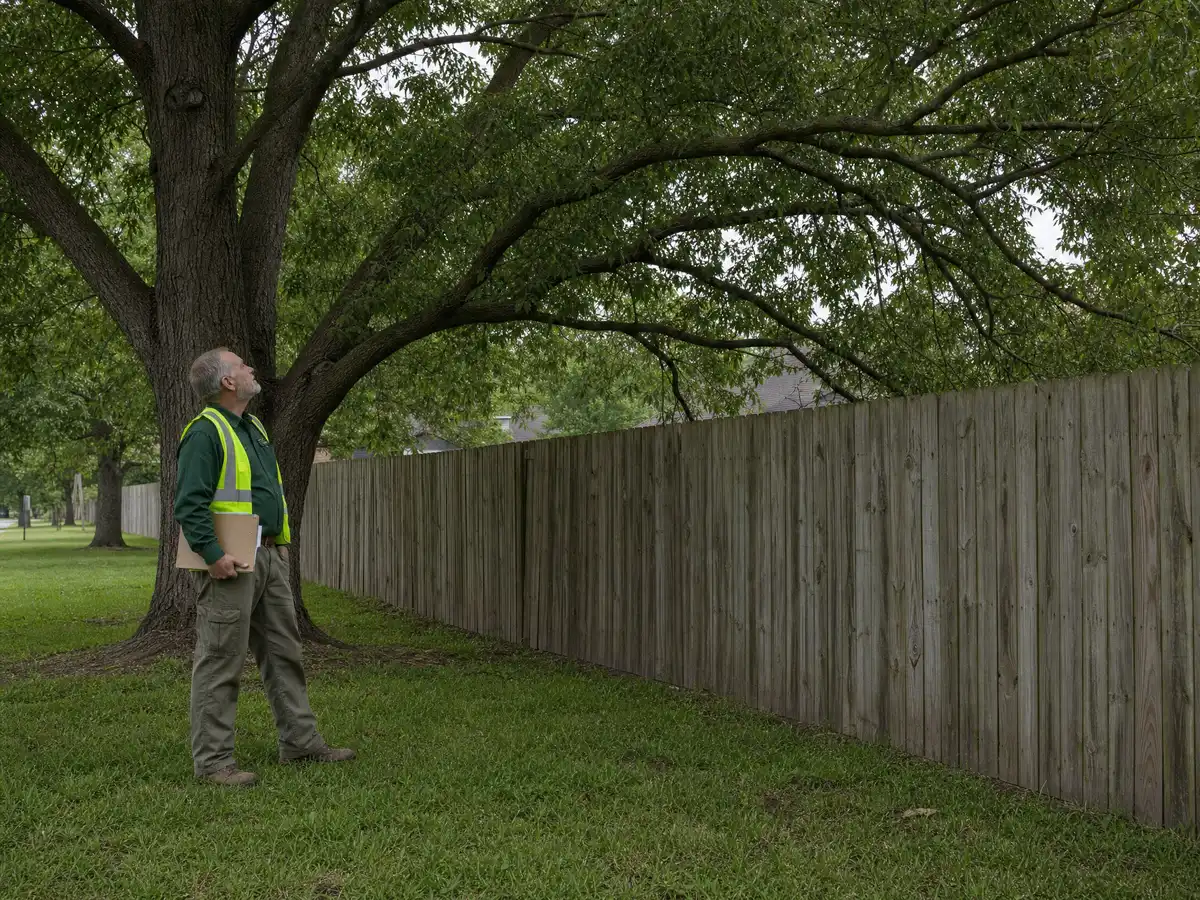
A perimeter zone or a natural area constraint attaches to a place on the site. If redevelopment is the plan, a strip along the residential boundary where nothing may be altered is a design constraint you’ve bought.
The Documents That Don’t Reach You
None of this is hidden, and most of it isn’t in the file you’ll be handed either.
A mitigation agreement lives in a development file at the city. An approved preservation plan sits with the site plan it accompanied. A permit condition about protection measures was satisfied years ago and the paperwork closed. None of these are title matters, so a clean commitment says nothing about them.
What that means practically is that finding out requires asking the city about the property rather than reading what the seller assembled. It’s a short inquiry and it’s rarely made.
Redevelopment Changes What Matters
If the plan is to hold and operate, the tree question is mostly a condition and risk question: what’s over the parking, what’s lifting the walkways, what fails in the next storm.
If the plan is to change the site, the regulatory position becomes the larger number. The trees you’d need to remove are priced by an ordinance you haven’t read yet, and on a wooded parcel in a city with a heavy mitigation formula, that figure can be material against the purchase price rather than incidental to it.
The two questions want different work, and it’s worth being explicit about which one is being asked before anyone walks the site.
What To Establish Before Closing
Four things, all answerable in advance, and none of them expensive relative to what they cover.
Whether a survival period is still running, which follows from when the site was completed. Whether any planting on it was mitigation rather than landscape, which the development file will show. Whether a boundary or low-ground constraint touches the parcel, which the ordinance and a walk will establish together. And whether a zoning condition attaches tree provisions the general code doesn’t, which means reading the zoning case for that specific property.
Before closing all four are negotiating points. Afterwards they’re simply yours, which is the entire argument for asking early.
The Rest Of What The Rules Ask For
The provisions themselves, explained once rather than nine times: what counts as protected, what a permit is called here, and what has to exist before a tree comes out.
- Tree Ordinance Compliance Across Collin, Dallas And Denton Counties
- Tree Mitigation Plans And What A Removal Really Costs
- Tree Removal Permits And What Each City Actually Calls It
- What Counts As A Protected Tree And Where The Line Sits
- Tree Preservation Plans: What Goes In One And Who Signs It
- Tree Protection During Construction On Commercial Sites
- Paying A Fee Instead Of Planting Replacement Trees
- Who Approves A Tree Removal, And How A Refusal Is Appealed
- Perimeter Zones, Floodplain Limits And Protected Natural Areas
- Street Trees, Rights-Of-Way And Trees On Public Property
- Tree Due Diligence Before You Buy Or Lease A Site
- When Tree Work Belongs In A Construction Schedule
- Tree Rules On An Operating Property, With No Construction
- Ordinances Get Amended, And The Version Matters
- Tree Ordinance Rules In HOA Common Areas
- Screening, Buffers And The Trees That Have To Stay
- Putting Tree Protection In A Contractor Scope Of Work
- Parking Lots, Paving And The Trees Underneath Them
- Storm Removals And What The Ordinance Still Wants After
- Trees In Easements And Who Actually Controls Them
- Choosing Replacement Trees, And Why Species Caps Exist
- Tree Ordinance Terms, Translated Into Plain Language
- How To Find Out Which Tree Rules Apply To Your Site
- See All City Tree Ordinances