

The Only Ordinance Here That’s Criminal
Every other city in this market enforces with civil penalties, administrative process, or mitigation owed as replacement stock. Wylie prosecutes.
Removing a protected tree is deemed a misdemeanor, and the definition reaches beyond felling: injuring a protected tree by failing to follow the required protection measures, where that causes or may reasonably be expected to cause the tree to die, falls under the same sentence. On conviction the penalty is one hundred dollars per caliper inch of the tree removed, paid to the city and held in a fund for supplemental landscape plantings.
That changes who needs to care. A civil penalty is a line in a project budget. A misdemeanor is a different conversation entirely, and it’s worth making sure the crew on site knows which city they’re standing in.
The Protected Tree Test Has Two Parts
Most cities set a single threshold. Wylie requires a tree to clear two, and a tree that fails either one isn’t protected.
Twelve Feet Tall
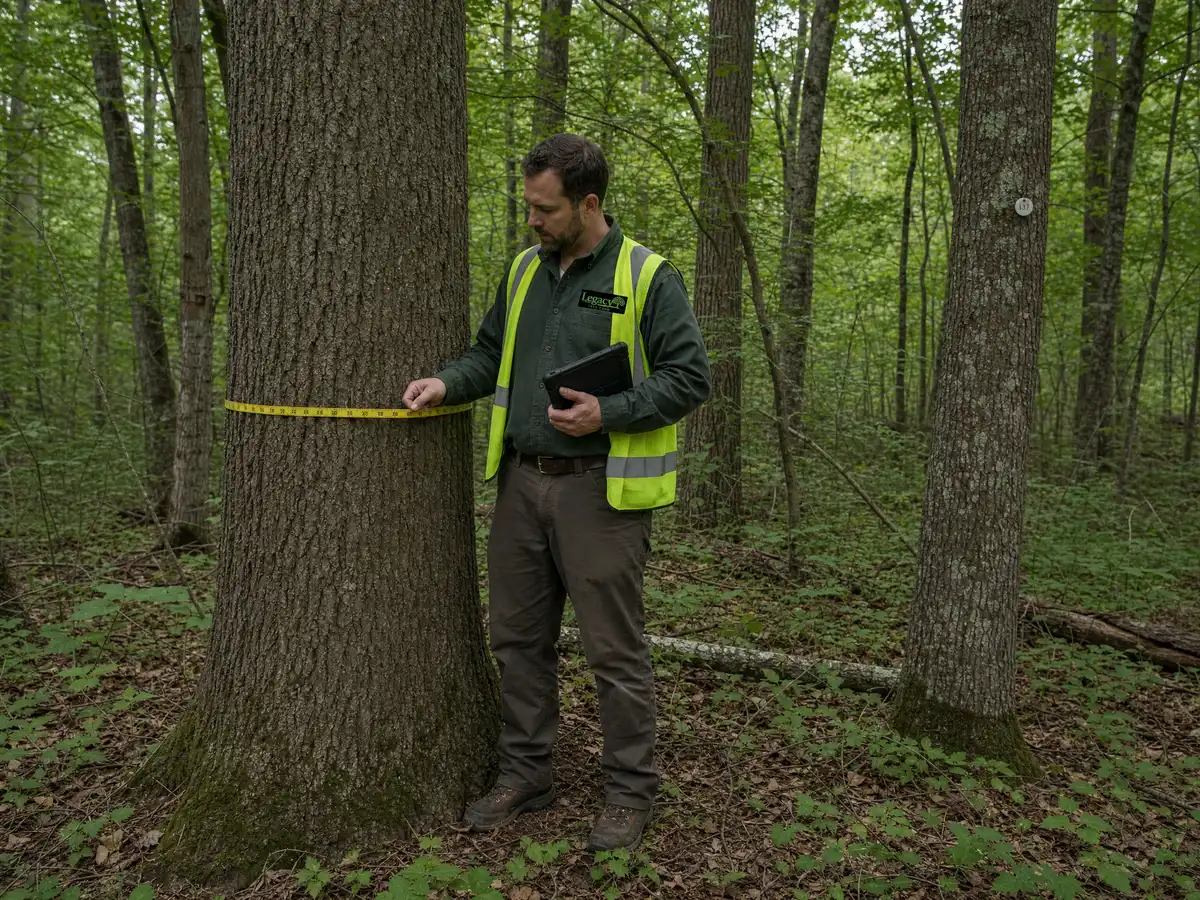
The first half of the test, and the one nobody expects. A tree below twelve feet in height is outside the definition regardless of how thick its trunk is, which matters on species that stay short and stout.
Six Inches Caliper

The second half. A single trunk of six inches caliper or greater at four and a half feet, or a multi-trunk totaling eight inches, measured as the largest stem plus half of each additional one.
Injury Is Prosecuted

Wylie doesn’t distinguish between the saw and the trench. Both sit inside the same criminal provision, which is a materially different exposure from a civil charge on a project budget.
Where Protection Simply Doesn’t Reach
This is the provision that decides what a Wylie site actually costs, and it’s worth stating precisely because it’s easy to describe wrongly.
The ordinance doesn’t exempt trees in the building footprint from a permit. It defines them out of protection. The trees a Tree Management Plan must seek to protect are those located outside public street and alley rights-of-way, utility, drainage, fence and pedestrian access easements, other public rights-of-way, and the buildable area of a building lot.
The distinction matters when somebody asks what you relied on. A permit exemption is something you apply for and receive; this is a tree that was never in the protected set, which is a stronger position and a different sentence.
Buildable area is defined too: for subdivision development, the part of a lot outside the required front, side and rear yards; for building permits, also the areas shown on the required site plan as necessary for the building. On a typical commercial site that’s most of the footprint, which is why drawing that line early changes the entire picture of what a wooded parcel will cost.
What The Plan Has To Show
The Tree Management Plan is specific about its contents, and it’s a site-wide document rather than a tree list.
It shows the location, species and caliper of every tree six inches caliper or greater measured at four and a half feet, which trees are proposed for removal and which for protection, and the methods of preservation for those being kept. It also shows the proposed building pads, drives, parking and all easements affecting existing trees, plus floodplain limits and the general grading limits of cut and fill.
That last requirement is the tell. A plan showing grading limits alongside retained trees is a document that makes conflicts visible before they happen, which is the entire reason to produce one early rather than to satisfy a checklist.
Grade Change Needs A Structure
Where the grade changes around a protected tree, a retaining wall or tree well has to be constructed at the new grade.
It’s the provision most commonly missed on any site in this market, because raising or lowering earth doesn’t look like tree work while it’s being done. It looks like earthworks, it’s done by a different subcontractor, and the tree that dies from it dies quietly two summers later.
In Wylie that matters more than elsewhere, because the consequence of the tree dying isn’t a civil charge. It’s the same misdemeanor provision that covers cutting one down.
The Instrument, City By City.
What each city actually uses to regulate a tree, taken from its own code. No two of these are the same document.
Plano
Article 17 of the Zoning Ordinance. The preservation plan IS the permit, replacement runs inch for inch from 8 to 30 inches and 1.5:1 above that, and a fee in lieu is available with the Director's approval.
Frisco
Subsection 4.01 of the Zoning Ordinance. A separate Tree Removal Permit, mitigation banded as a percentage of diameter removed from 0 to 300 percent, and a survey needing two seals rather than one.
Dallas
Article X, Landscape and Tree Conservation. Protected at 8 inches, mitigation waived across the development footprint up to 70 percent of the site, and topping defined and regulated by name.
Garland
A Tree Management Plan plus Removal Authorization, class-based replacement ratios from 2:1 down to 0.25:1, and a civil penalty of $250 per diameter inch.
Allen
Land Development Code Article VII. A credit ledger rather than a ratio, where removal costs exactly double what preservation earns, and a 90 day clock on the permit.
McKinney
Unified Development Code Article 4. Three protected tiers, mitigation doubling above 17 inches, and a perimeter zone beside existing housing where protected trees may not be altered at all.
Carrollton
Chapter 155. Replacement at 100 percent of the diameter removed, clear-cutting prohibited outright, and a survival obligation running two years past the end of the project.
Richardson
No private-property tree ordinance at all. The tree chapter covers public trees only, which makes documentation the owner's protection rather than the city's.
- See All City Tree Ordinances