

What The Survey Is Actually For
Two different documents get called a tree survey, and confusing them is expensive.
One is a map: where the trees are, drawn accurately enough to build against. The other is an assessment: what each one is, how big, and what condition it’s in. A submission generally needs both, and they’re produced by different disciplines.
Get either half wrong and the plan comes back, not because the drawing was bad but because the wrong professional attested to the wrong fact.
Two Seals, Two Disciplines.
| Fact Being Established | Who Attests To It |
|---|---|
| Where each protected tree stands | A registered surveyor. Position on a plan is a survey question and cities treat it as one |
| What species it is, and its diameter | A registered landscape architect or certified arborist |
| Its condition, and whether it’s dead or declining | The arborist, and this is the half that changes what you owe |
| Which trees are protected under that city’s code | Whoever knows the ordinance. It’s a different threshold in every city we work in |
Frisco is the strictest about it and asks for both seals explicitly. Plano works from a caliper threshold instead, requiring the locations and species of individual trees at eight inches or larger. The requirement changes at the city line, and so does what a compliant survey has to contain.
Condition Is The Half That Pays For Itself
Most surveys record species and size carefully and treat condition as a comment. On a commercial site condition is frequently worth more than either.
Frisco’s own sample survey carries an eight-inch dead Live Oak removed at 0%, annotated as not mitigated. A dead tree recorded as dead costs nothing to remove. The same tree with condition left blank is an ordinary protected tree with an ordinary obligation attached.
That only works if the condition was established and written down before the application. Establishing it afterwards, once the tree is firewood and the reviewer is asking, isn’t a survey. It’s an argument.
Three Ways A Survey Costs More Than It Saved
Each of these is a plan that came back, and none of them was a drafting error.
Commissioned After The Layout
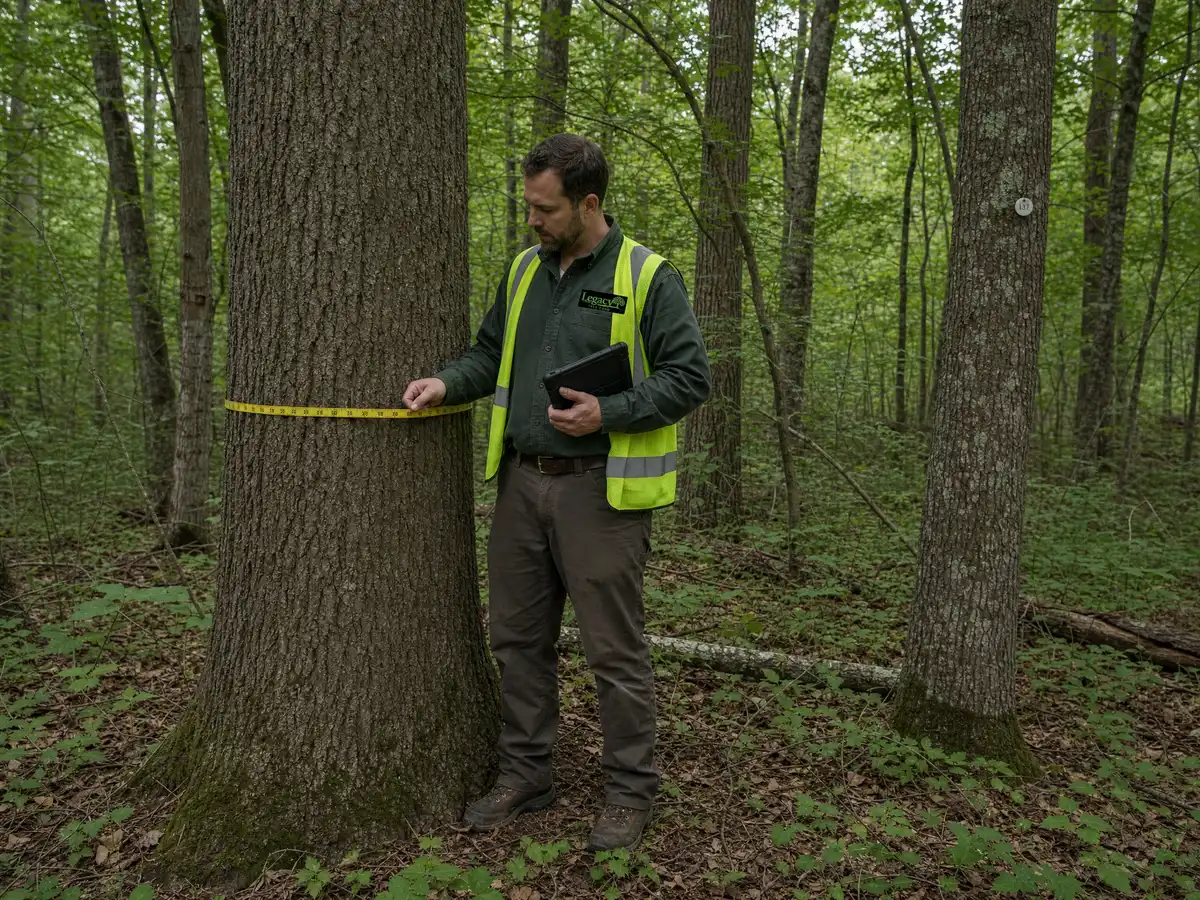
A survey at concept can move a building by twenty feet at no cost. The same survey after the layout is fixed produces a mitigation bill instead, because the only remaining variable is what you pay.
Measured At The Wrong Height
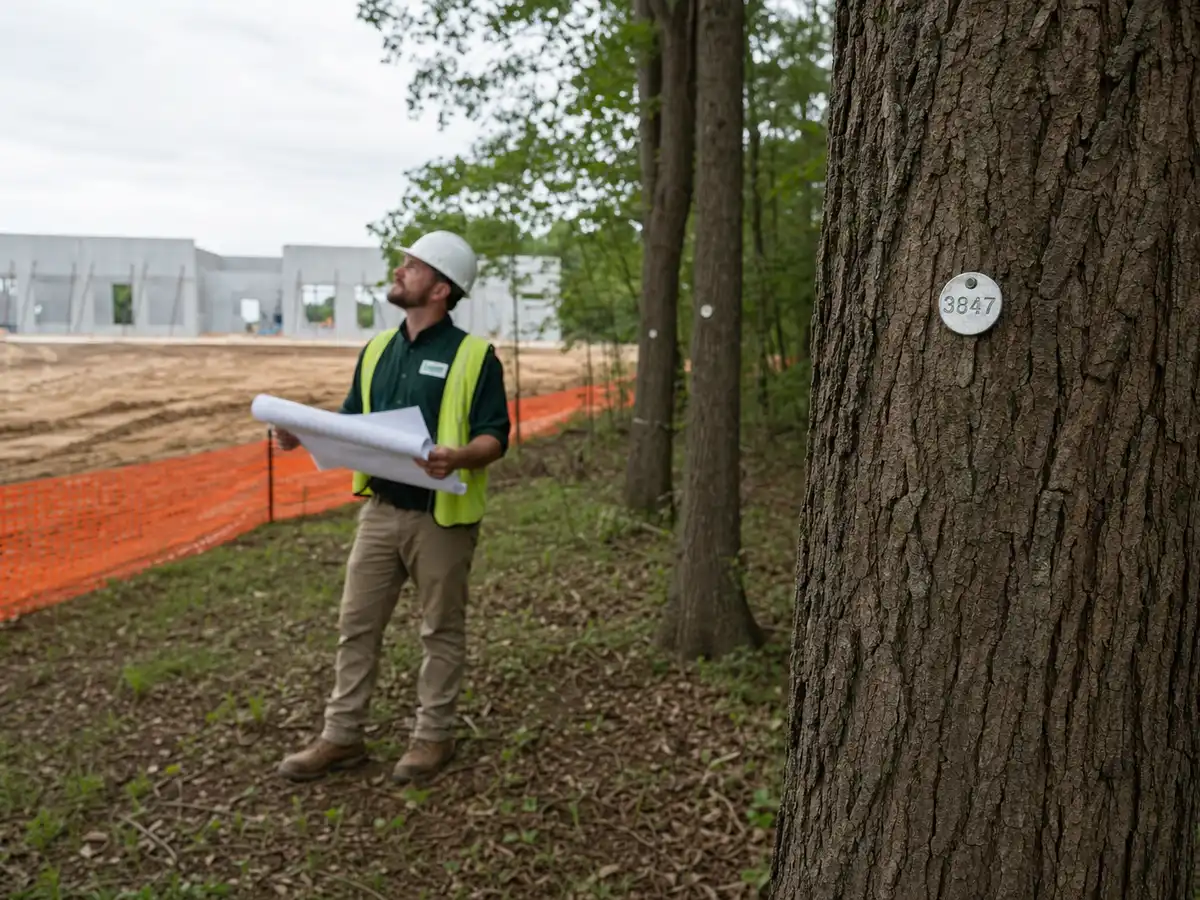
Diameter at breast height and caliper are different numbers on one trunk, and cities specify which applies. A survey accurate in the wrong unit moves trees across thresholds in both directions.
Species Identified Loosely
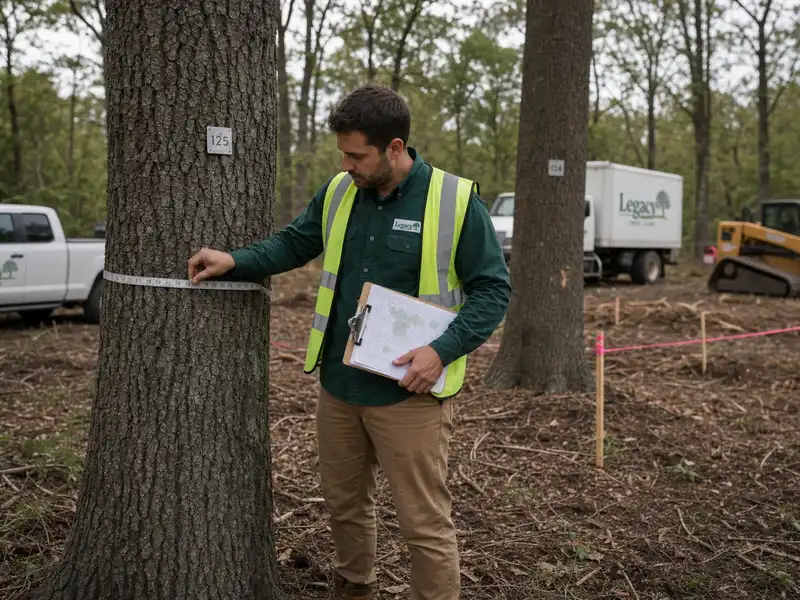
Where replacement is priced by species class, a hedged identification isn’t a detail. It’s the multiplier applied to every inch on the schedule, and a reviewer can’t approve what nobody would sign.
What We Hand Over
A drawing showing every tree that meets the city’s threshold, with each one carrying species, diameter measured at the point that city specifies, condition, and whether it’s protected.
Alongside it, the mitigation arithmetic computed against that city’s own table, so the number is known before it’s owed. Then the protection measures for everything staying: where the fencing goes, and what can’t happen inside it.
The preservation plan is the same information arranged for a reviewer, which is why we produce them together rather than treating the second as a separate commission.
When It Belongs In The Program
Before the layout, on any site where trees might constrain it. That’s the whole of the advice and it’s routinely ignored, because a survey looks like a site activity and gets scheduled with the clearing.
Some constraints can’t be paid off. A boundary strip where nothing may be altered, a floodplain cap limiting what proportion may be touched, a specimen tree that no waiver reaches: these decide where the building goes rather than what it costs. Where each item sits in a schedule covers the sequencing in full.
Who Actually Calls Us For This
Civil engineers and developers, mostly, and usually at one of two moments.
The good moment is due diligence or concept, where the question is what the site can hold. The expensive moment is a review comment, where the question is what the city will accept and the answer has to be produced against a deadline.
Both are work we do. The first is cheaper, and saying so costs us the second one often enough that it’s worth putting on the page.
The Rest Of What We Do
Eleven services for commercial property. Most sites need two or three.