

Three Categories Of Ground, Not Two.
Most disputes here come from thinking a property is divided into common area and private lots. Many declarations create a third category, and it’s where the arguments live.
Common area is the association’s. A lot is the owner’s. Limited common element is common area reserved for the use of one owner, and responsibility for it is allocated by the declaration rather than by intuition. A tree in a courtyard only one unit can reach frequently sits in that third category.
We aren’t attorneys and this isn’t legal advice. What follows is what to read and what we see when we’re called into these.
What To Check, In Order.
| Document | What It Settles |
|---|---|
| The plat or site plan | Which category the ground the tree stands in actually falls into. Start here, not with the declaration |
| The declaration or CC&Rs | Who maintains each category, and whether trees are named or fall under landscaping generally |
| Any architectural or landscape guidelines | Frequently where approval requirements for removal or planting live, separately from maintenance |
| Board resolutions and past practice | What the association has actually done historically, which can matter when a document is ambiguous |
| The city ordinance | A separate question entirely, and it doesn’t care which of you is responsible |
Three Situations That Recur
A Tree On A Lot, Overhanging Common Area.
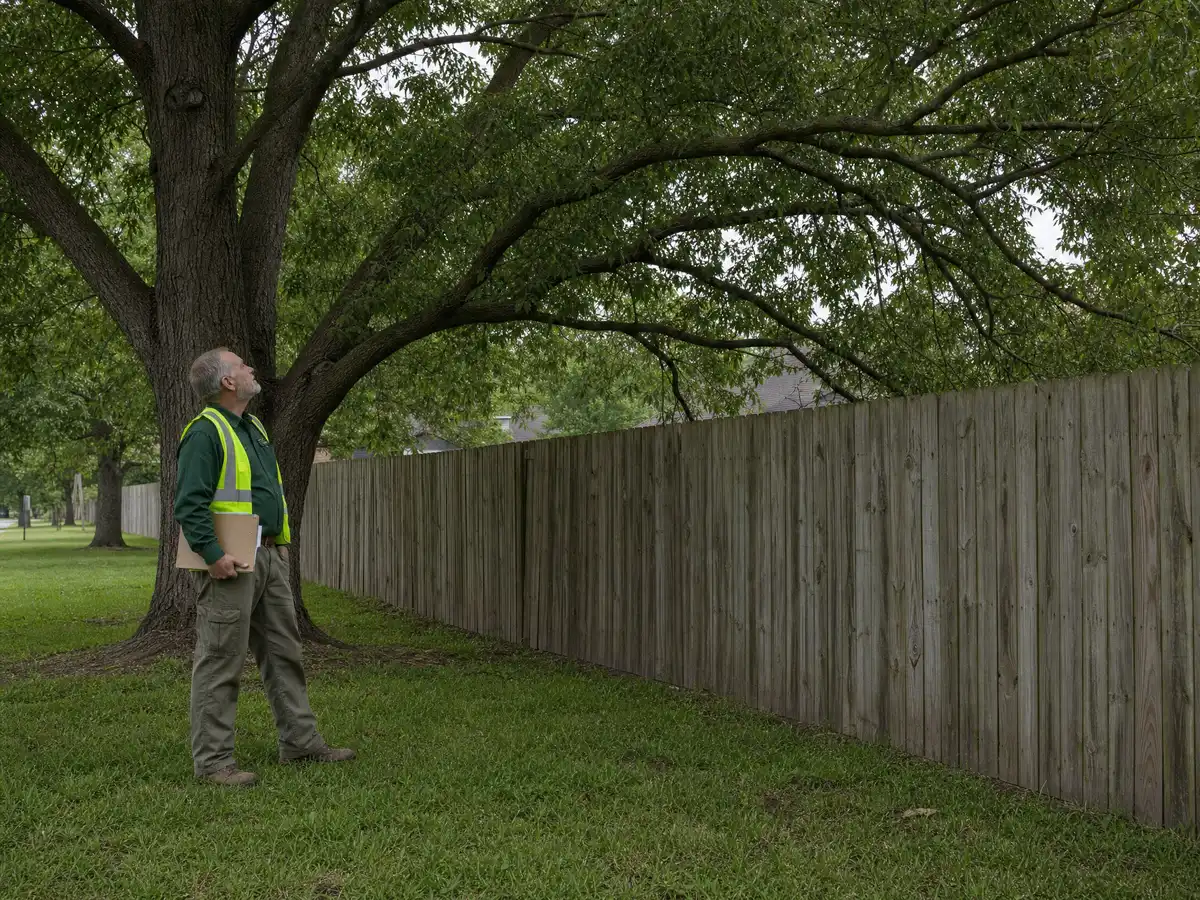
The trunk decides ownership in most declarations. What overhangs doesn’t transfer responsibility, though it frequently transfers the complaints.
A Tree Nobody Claimed For Years
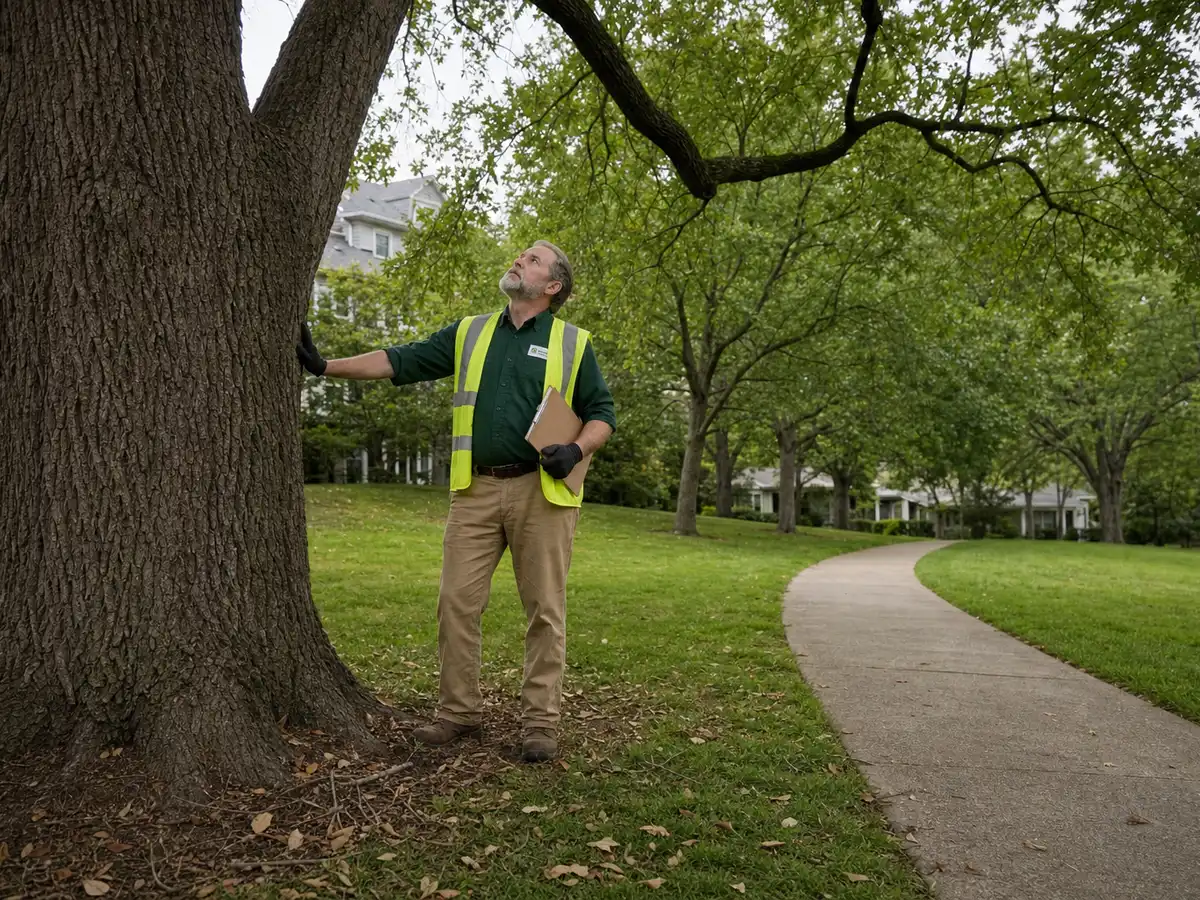
Deferred by both parties because each assumed the other had it. This is the most common version, and it usually surfaces as a failure rather than as a question.
An Owner Who Removed Something

Removal without approval, on ground that turned out not to be theirs, or of a tree the city protected. Three separate problems, and they get discovered in that order.
Approval And Maintenance Are Different Questions
An owner can be responsible for maintaining a tree and still need approval to remove it. Those provisions sit in different documents and get conflated constantly.
Maintenance obligation is usually in the declaration. Approval requirements are usually in architectural guidelines, and they can apply to a tree on a lot the owner unambiguously owns. “It’s my tree” answers the ownership question and not the approval one.
The City Doesn’t Care How You Split It
This is the point most worth carrying away, because it survives every internal arrangement.
Where a tree is protected under a city ordinance, the city’s interest attaches to the property. An association that removed a protected tree from common area, or an owner who removed one from a lot, is dealing with the city on the city’s terms regardless of what the declaration said about who mows there.
Several cities here specifically keep common areas covered even where they exempt developed residential lots, which surprises boards that assumed residential exemptions covered everything they manage.
Why This Surfaces At The Worst Moment
Almost never as a question. Nearly always as an event.
A limb comes down, an owner gets a quote and sends it to the board, or somebody removes something and a neighbor objects. By then both parties have taken a position, and the documents get read for the first time by people already committed to an answer.
Reading them cold, before anything has happened, produces a different result than reading them in the week somebody is asking who pays for a crane. That’s the entire argument for treating this as an administrative task rather than a dispute waiting to happen.
What Boards Should Do Before It Matters
Three things, none of which requires a lawyer or much money.
Establish which category the significant trees stand in, once, from the plat rather than from memory. Record their condition, so a future failure has a history behind it. And write down the position in a form the next board can find, since board composition turns over and institutional memory is the first thing lost.
When Both Sides Are Looking At Us
We work for whoever engaged us, and we produce findings both can read.
The technical questions are answerable: what condition the tree is in, what it needs, whether a defect is serious, what the ordinance treats it as. Those don’t change depending on who is paying. The allocation question is for the documents and, where it stays contested, for an attorney.
What we won’t do is tell a board that an owner is responsible, or the reverse, because that’s a reading of the declaration rather than a reading of the tree.
Other Questions We Get Asked
Short answers to the things commercial clients ask before they ask for a price.
- Arborist Or Tree Service
- Job Site Risk Assessment For Tree Work
- Root Barriers In Construction
- Landlord Or Tenant: Who Handles The Trees?
- Can You Do Your Own Tree Survey?
- Deep Root Fertilization
- Does Insurance Cover Tree Removal?
- Trees Growing Close To A Building
- What Tree Assessments And Reports Cost
- How To Vet A Commercial Tree Contractor
- What Goes In An Arborist Report
- What Happens On The Day Of Tree Work
- Is There A Cheapest Time For Tree Work?
- See All Commercial Tree Questions