

Two Different Documents Called A Survey
One is a record you keep. The other is a document a reviewer accepts.
The first can absolutely be produced in house, and on most commercial properties it should be, because it costs almost nothing and it improves every professional engagement that follows. The second has requirements about who prepared it, and no amount of care substitutes for them.
What You Can Do Yourself, Usefully.
| Task | Why In House Works |
|---|---|
| Locating and counting trees | A site plan and a walk. Approximate positions are fine for an internal record |
| Photographing each tree, dated | The single highest-value thing a property can do for free. Phones date the file automatically |
| Noting obvious changes | A crack that extended, a limb that dropped, ground lifted at a base. Change is the finding, not condition |
| Recording what work was done | Who, when, what. Routinely disputed later and rarely written down at the time |
| Rough trunk measurements | Useful for scoping, provided nobody treats them as the figure a threshold is judged on |
Where It Stops Being Enough
Three lines, and crossing them by accident is the expensive version.
Anything Going To A City
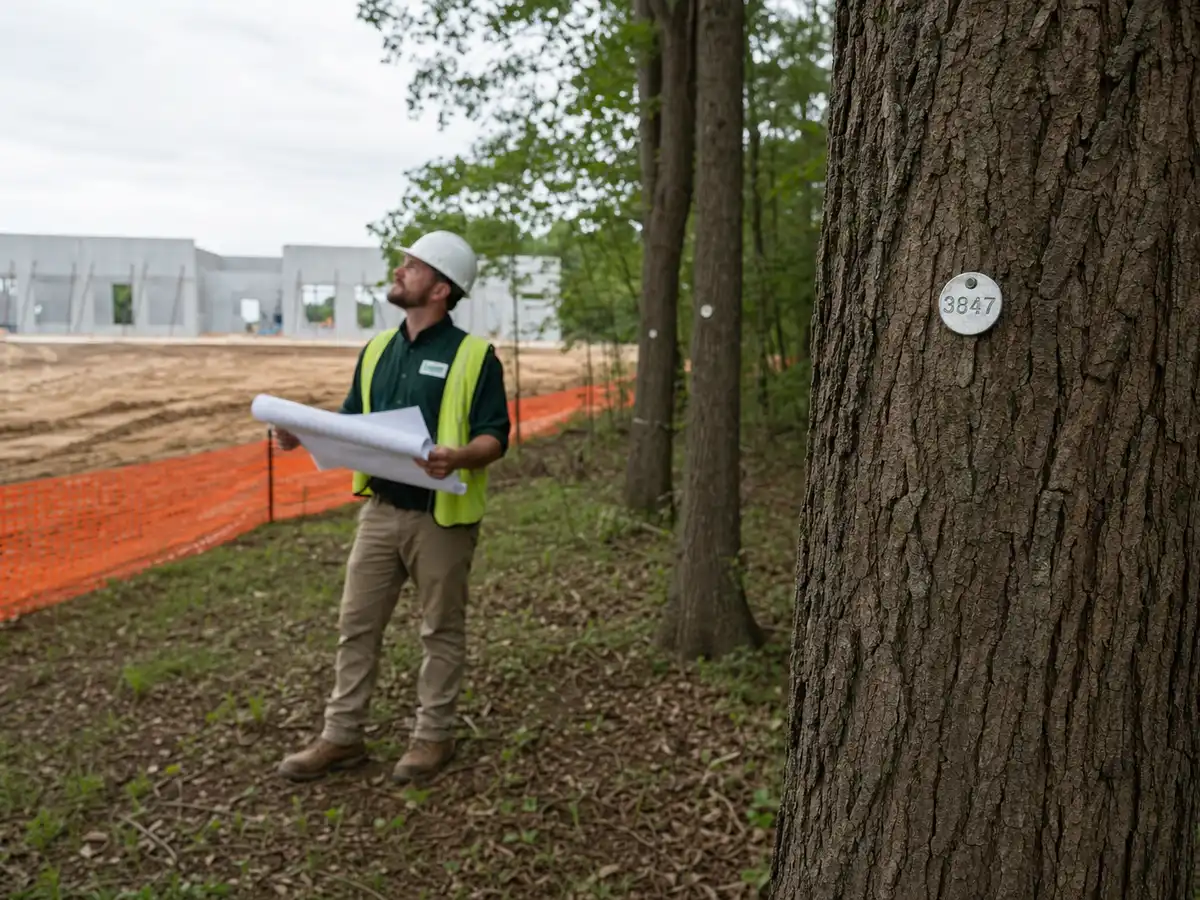
Frisco wants a detail tree survey prepared by or under the supervision of a landscape architect or certified arborist, and the locations sealed by a registered surveyor. An accurate in-house drawing doesn’t meet that, however good it is.
Deciding If A Defect Matters
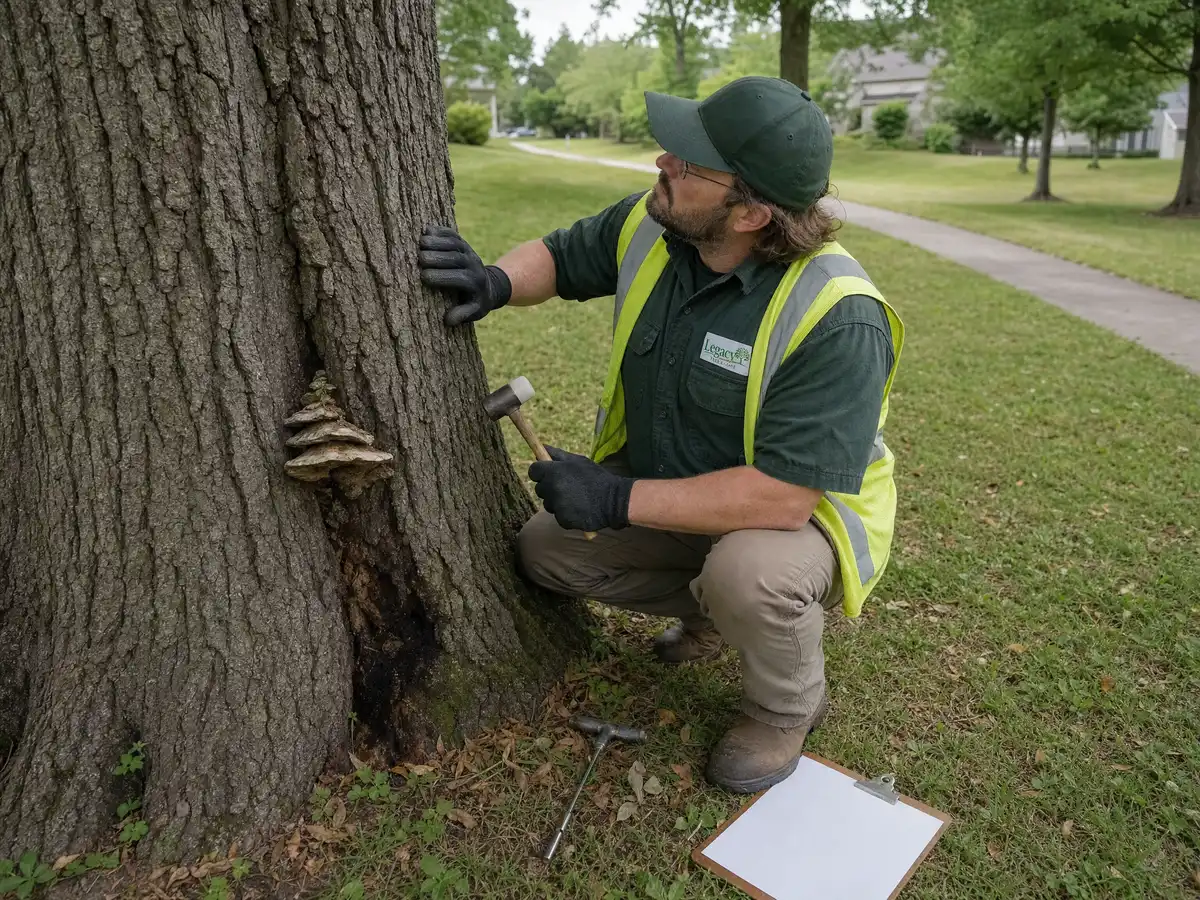
Noticing is the useful in-house skill. Judging isn’t, and a program that relies on untrained observation to settle whether something is serious has substituted frequency for judgment.
Measurements That Decide Money

Where a diameter decides whether a tree is protected or what mitigation costs, it needs measuring at the point the ordinance specifies. A tape at the wrong height moves trees across thresholds in both directions.
Species Is Harder Than It Looks
The one in-house task that regularly goes wrong quietly.
Identification matters commercially because several cities price replacement by species class, so a hedged guess isn’t a detail, it’s the multiplier applied to every inch. Hackberry, cedar elm and several oaks are routinely confused, and the difference between them can be the difference between a modest obligation and a substantial one.
Record what you believe and mark it as unverified. That’s more useful than either a confident wrong answer or a blank column.
What In House Records Are Genuinely Worth
More than most properties assume, because their value isn’t the survey. It’s the history.
A folder of dated photographs going back four years answers questions no professional assessment commissioned today can: whether a defect is moving, whether decline started before the construction, whether the tree was like that when the tenant moved in.
That’s the record that can’t be bought later at any price, and it’s created by somebody walking a route with a phone.
Where In-House Records Go Wrong
Not through inaccuracy. Through inconsistency.
A different person walks a different route each time, the numbering changes, some visits photograph everything and others photograph whatever looked alarming. The result is a folder that can’t be compared with itself, which removes the only advantage it had.
Fixing that costs nothing: one route, one numbering scheme, the same photographs each time, even when nothing has changed. Especially when nothing has changed, because a picture of a tree that looks identical to last year is exactly the evidence that proves it.
What To Do With What You Find
The in-house record creates a second question that properties are rarely ready for: what happens when somebody notices something.
Without an agreed route, findings sit in a folder. The useful arrangement is simple and worth deciding in advance: anything dead over an occupied area, anything newly lifted at a base, and anything that changed noticeably since the last walk goes to somebody who can settle it, rather than waiting for the next scheduled visit.
Everything else can wait, and saying so is what stops the record becoming a source of alarm rather than a source of information.
How The Two Fit Together
The in-house record makes the professional work cheaper and better.
An arborist arriving to a property with locations, photographs and a work history spends the visit assessing rather than reconstructing. On a portfolio that difference is measured in days, and it shows up as a smaller fee rather than as goodwill.
Where a submission is needed, the in-house record becomes the basis rather than the deliverable, and the credentialed work is confirming, measuring and sealing rather than starting from an empty page.
Other Questions We Get Asked
Short answers to the things commercial clients ask before they ask for a price.
- Arborist Or Tree Service
- Job Site Risk Assessment For Tree Work
- Root Barriers In Construction
- Landlord Or Tenant: Who Handles The Trees?
- Deep Root Fertilization
- Who Is Responsible For Trees In An HOA
- Does Insurance Cover Tree Removal?
- Trees Growing Close To A Building
- What Tree Assessments And Reports Cost
- How To Vet A Commercial Tree Contractor
- What Goes In An Arborist Report
- What Happens On The Day Of Tree Work
- Is There A Cheapest Time For Tree Work?
- See All Commercial Tree Questions