

What It Is, Precisely.
Liquid fertilizer injected under pressure into the soil around a tree, typically in a grid across the root zone at a depth of several inches.
The depth is the selling point and it’s also the part worth examining. Most absorbing roots are shallower than the injection depth, in the upper layer of soil where water and gas exchange happen, so material delivered below them isn’t obviously reaching the part of the tree that would use it.
When It’s Genuinely Useful
| Situation | Verdict |
|---|---|
| A soil test shows a specific deficiency | Legitimate. Treat the deficiency the test found, at the rate it indicates |
| Trees in confined planting with no organic input | Plausible. A parking island receiving no leaf litter has a genuinely different nutrient cycle from a lawn |
| A tree declining from depth, compaction or girdling | No. The problem is physical and fertilizer doesn’t address any of it |
| Annual program on a healthy canopy | No. This is the version that gets sold, and it’s buying a schedule rather than a result |
The Diagnosis Comes First, Or Not At All.
Test Before Treating
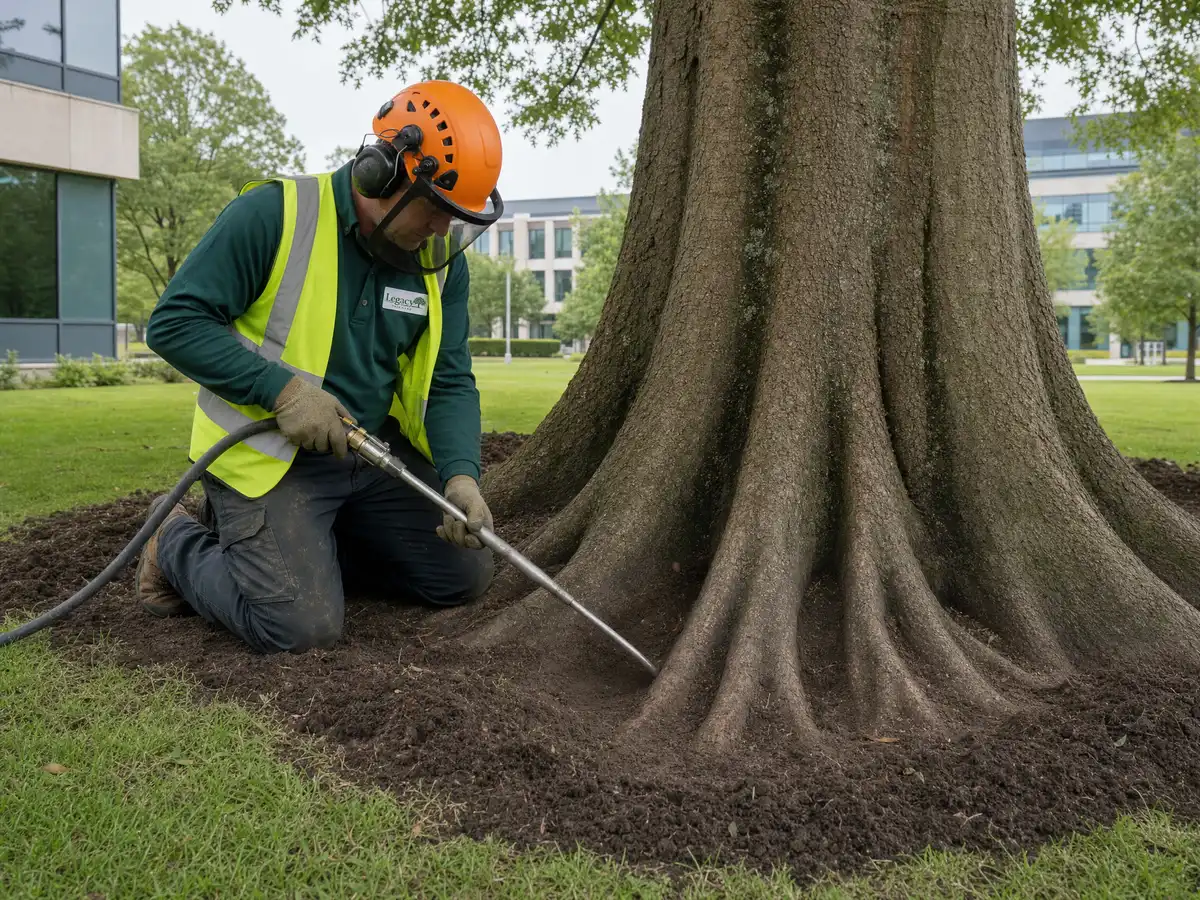
A soil test costs a fraction of a season’s treatment and answers whether anything is actually deficient. Applying nutrients without one is treating a hypothesis.
Rule Out The Physical First
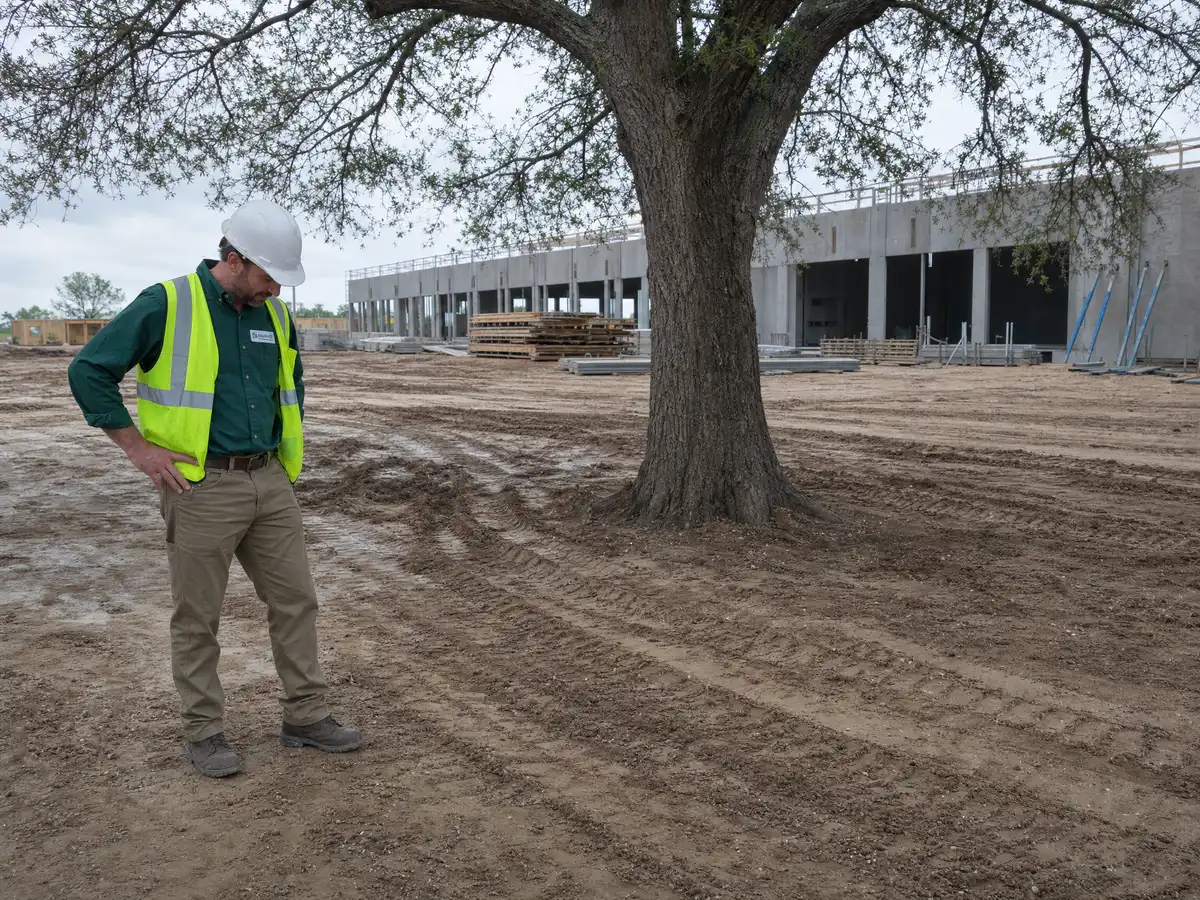
Buried root collars, girdling roots and compaction produce the same thinning crown that a deficiency would, and they’re far more common on commercial property. None of them respond to feeding.
Consider What's Cheaper

Mulch, water and relieving compaction address more declining commercial trees than fertilizer does, and they cost less. They’re also harder to sell as an annual program.
Why It Gets Sold Anyway
Because it’s recurring, easy to schedule, hard to disprove and invisible when it does nothing.
A tree that was going to be fine looks fine afterwards. A tree declining from a buried root collar continues declining, and the usual response is another season of treatment rather than a diagnosis. Nothing about the outcome tells the property whether the money worked, which is the definition of a service worth scrutinizing.
That isn’t an accusation of dishonesty. It’s a structural feature of a treatment whose success is unobservable.
What Actually Helps A Struggling Commercial Tree
In rough order of how often it’s the answer.
Exposing a buried root collar. Relieving compaction. Fixing irrigation that kept roots shallow or drowned them. Mulching properly, in a flat ring rather than against the trunk, which returns organic matter and moderates soil temperature and moisture. And leaving the tree alone through a difficult season rather than intervening.
Fertilizer appears on that list where a test put it there, and rarely otherwise.
If You’re Buying It, Buy It Properly.
Three conditions worth insisting on.
A soil test first, with the results shown to you rather than summarized. A product and rate that responds to what the test found, not a standard mix applied everywhere. And a stated expectation of what should change and by when, so the next visit can check rather than repeat.
A proposal that skips the test and offers an annual program is selling a subscription, and the honest version of this service doesn’t look like that.
Timing, If It’s Indicated.
Assuming a test has justified it, the season matters less than the condition of the tree receiving it.
A tree under acute stress in mid-summer isn’t well placed to use additional nitrogen, and pushing growth on a tree that can’t support it’s a common way to make a decline worse rather than better. The cooler months, when the tree isn’t simultaneously fighting heat and water shortage, are the conventional window.
What matters more than the month is that the physical problems were ruled out first. A perfectly timed treatment on a tree with a buried collar is still a season spent on the wrong thing.
The Confusion With Mycorrhizal And Biostimulant Products
These get bundled into the same visit and sold under the same heading, and they’re making a different claim.
Rather than supplying nutrients, they propose to improve how a tree acquires them. The reasoning is plausible and the evidence for benefit on established landscape trees in reasonable soil is considerably weaker than the marketing suggests.
The honest position is that they’re unlikely to harm anything and are frequently sold where nothing was needed at all. If one is proposed, the question to ask is the same as for fertilizer: what specifically is it addressing, how was that established, and what should change if it works.
What We Do Instead, Usually.
Look at the root collar, the soil and the irrigation before anything else, because those explain most of what we’re called about.
Where a test shows a real deficiency we’ll treat it and say why. Where it doesn’t, we’ll say that too, which occasionally costs us a recurring line item and is the reason this page exists in the form it does.
Other Questions We Get Asked
Short answers to the things commercial clients ask before they ask for a price.
- Arborist Or Tree Service
- Job Site Risk Assessment For Tree Work
- Root Barriers In Construction
- Landlord Or Tenant: Who Handles The Trees?
- Can You Do Your Own Tree Survey?
- Who Is Responsible For Trees In An HOA
- Does Insurance Cover Tree Removal?
- Trees Growing Close To A Building
- What Tree Assessments And Reports Cost
- How To Vet A Commercial Tree Contractor
- What Goes In An Arborist Report
- What Happens On The Day Of Tree Work
- Is There A Cheapest Time For Tree Work?
- See All Commercial Tree Questions