


Taylor Guynes
ISA Certified Arborist TX-4334A
- ISA Certified ArboristCertificate TX-4334A, International Society of Arboriculture
- ISA Tree Risk Assessment Qualified (TRAQ)Trained in standardized tree risk assessment methods
- Bachelor of Science in ForestryTexas A&M University
- Master of Public AdministrationUniversity of Texas at Arlington
- Former Municipal Urban Forester and City ArboristManaged public tree programs for a North Texas city
- 10+ Years in North Texas Urban ForestryExperience across nonprofit, municipal, and private sectors
- Community Tree EducationPresenter on native Texas trees for municipal sustainability programs and Master Gardener groups
Certification is verifiable through the International Society of Arboriculture.
The Distinction In One Line
An arborist is a credentialed practitioner who assesses trees and decides what should be done. A tree service is the operation that carries work out.
Plenty of firms are both, including this one, and plenty of firms describing themselves as one are only the other. The question that matters isn’t the label on the truck but whether somebody qualified is deciding what happens before a saw is started.
What Each Is For
| You Need | Because The Question Is |
|---|---|
| An arborist | Should this tree come out. Why is it declining. Is this defect serious. What does the ordinance require here |
| A tree service | This has already been decided and now needs doing safely, insured, and without disrupting the property |
| Both, in order | Nearly every commercial situation, because the decision should precede the work rather than being implied by it |
Three Signals Worth Checking
None of them is what the company calls itself.
Who Looked At It, And When.
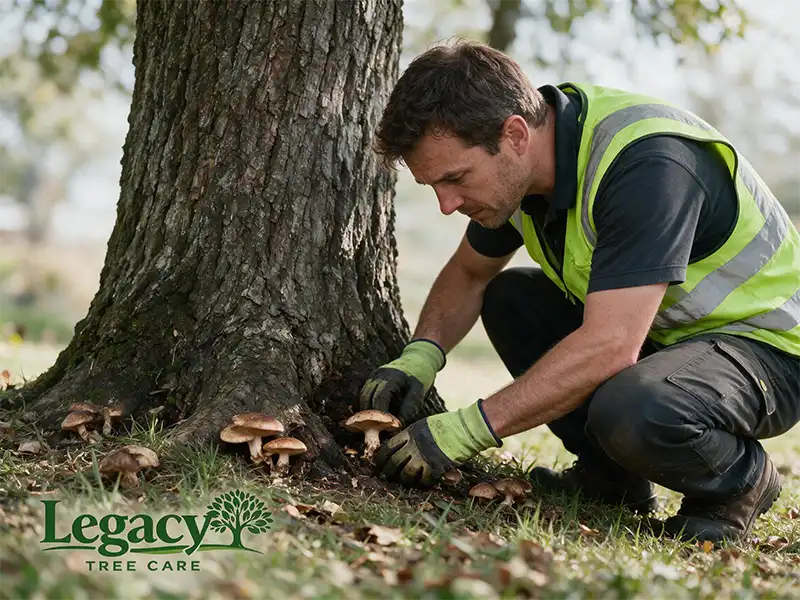
A quote produced without anybody examining the root flare, the unions and what stands underneath is a price for an activity rather than a recommendation about a tree.
Whether Anything Was Ruled Out

An assessment that considered pruning, support and target management before landing on removal reads differently from one that arrived at removal directly. The reasoning is the product.
What Arrives In Writing

A findings document you could forward to an insurer or a board, versus a scope of work and a number. Both are legitimate. Only one of them answers a question.
Why The Distinction Costs Money
Because the incentive sits in a different place for each.
A crew is paid to perform work, so a visit that concludes with nothing to do is a wasted trip. An assessment is paid for regardless of the answer, so “leave it and look again next year” costs the assessor nothing. That isn’t a claim about anybody’s honesty. It’s a structural difference, and it’s why the same tree can attract two very different recommendations.
Research reviewed by the ISA is consistent with it: credentialed assessors have been found to give lower risk ratings and prescribe less severe mitigation than uncredentialed ones. The qualified opinion is the one likelier to keep the tree.
What Credentials Actually Establish
The ISA Certified Arborist credential establishes that somebody met a knowledge standard and is held to a code of ethics. It doesn’t establish judgment, and it isn’t a guarantee of anything.
It’s still worth asking for, on any vendor including us, along with insurance and a written scope. A company that hesitates on any of those three has told you something useful, and asking costs nothing.
This site publishes no certification numbers, because none have been supplied for publication. Ask directly and you’ll get the real answer.
When A Tree Service Alone Is The Right Purchase
Frequently, and pretending otherwise would be its own kind of overselling.
Scheduled clearance pruning to a known specification, deadwood removal already identified, a stump ground after an authorized removal, storm debris cleared. The decision in each of those was made already, and paying for it to be made again adds a document nobody needs.
What warrants an arborist is any situation where the question is open: a tree somebody is worried about, a decline nobody has diagnosed, a removal that has been recommended by whoever would perform it, or anything touching a protected tree.
What A Good Vendor Does When You Only Wanted A Quote
The tell is small and it separates the two categories more reliably than any credential.
Asked to price a removal, a firm working as an arborist will look at the tree before pricing it, and will occasionally come back with something other than a price: that the tree could be pruned instead, that the decline has a cause worth diagnosing, or that the city treats it as protected and there’s a step before any of this.
None of that is what you asked for, and all of it is worth more than what you asked for. A firm that only ever returns the number you requested is doing exactly what a tree service should do, which is fine when the decision is already made and expensive when it isn’t.
The Commercial Version Of The Question
On commercial property there’s a third party in the room who isn’t on site: an owner, a board, an insurer or a reviewer.
That’s what tilts the answer. A residential customer can decide from a conversation in the driveway. A manager approving spend has to justify it to somebody who wasn’t there, and only one of these two purchases produces a document capable of doing that.
Other Questions We Get Asked
Short answers to the things commercial clients ask before they ask for a price.
- Job Site Risk Assessment For Tree Work
- Root Barriers In Construction
- Landlord Or Tenant: Who Handles The Trees?
- Can You Do Your Own Tree Survey?
- Deep Root Fertilization
- Who Is Responsible For Trees In An HOA
- Does Insurance Cover Tree Removal?
- Trees Growing Close To A Building
- What Tree Assessments And Reports Cost
- How To Vet A Commercial Tree Contractor
- What Goes In An Arborist Report
- What Happens On The Day Of Tree Work
- Is There A Cheapest Time For Tree Work?
- See All Commercial Tree Questions