

Four Seasons, Four Different Questions.
The trees don’t change much between March and August. What changes is the load on them, the visibility of their defects, and what happens if something fails.
A commercial property that schedules by the calendar rather than by the season is doing the right work at the wrong time, which is a surprisingly expensive way to be conscientious.
What Each Season Asks
| Season | What Changes |
|---|---|
| Spring | Straight-line winds and storm loading arrive while the canopy is filling, which is the heaviest and least aerodynamic it gets. Defects are also hardest to see once leaves are out |
| Summer | Heat and water stress. Failures happen on still days as well, and decline that started earlier becomes visible |
| Fall | Leaf drop reveals structure. The best window of the year for seeing what’s actually in a crown |
| Winter | Bare canopy, occasional ice loading, and the season when structural work is least disruptive to the tree and to tenants |
Look When You Can See
The single most useful scheduling decision on this page.
Assess In The Bare Season

Cracks, unions, deadwood and old cuts are visible from the ground once leaves are down, and largely hidden once they’re up. The same inspection produces a better result for the same money.
Work Before The Wind
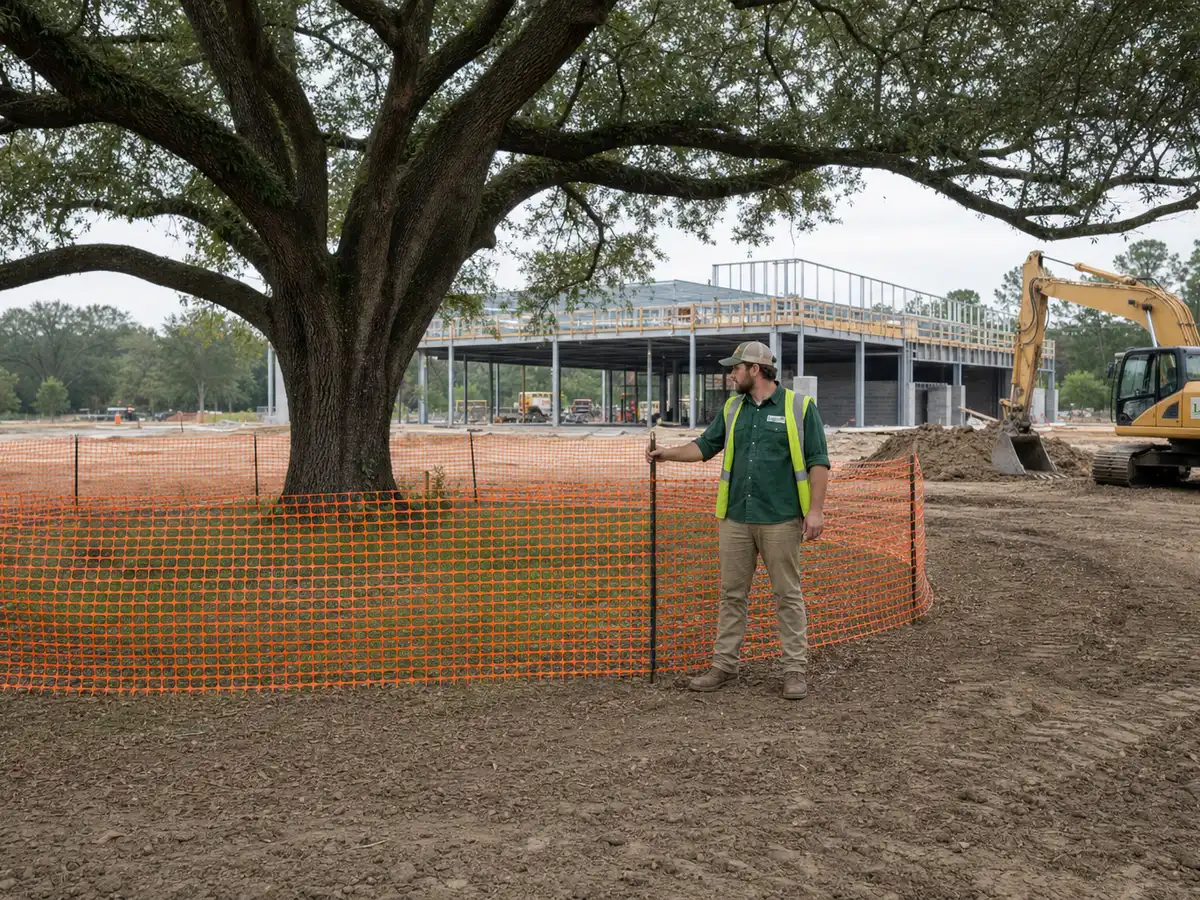
Findings acted on before spring rather than after it. The failures that arrive with the first serious storm were mostly identifiable months earlier.
Watch In The Heat
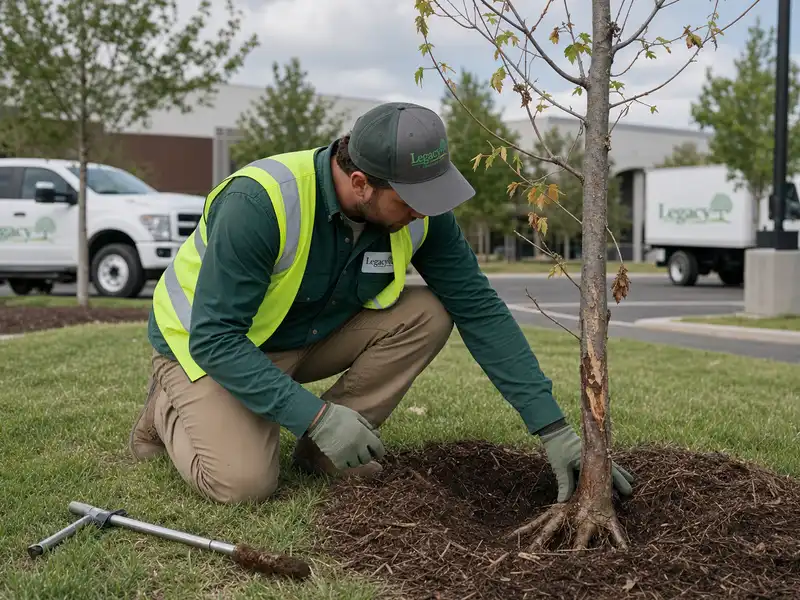
Summer is when decline surfaces. Early color, wilting that doesn’t recover overnight, and thin crowns are all more informative in August than at any other time.
Spring Is The Worst Combination
Straight-line winds arrive most springs in this region, and they arrive at the point in the year when the canopy has just leafed out.
A full canopy catches far more wind than a bare one, so the same gust applies a substantially greater load than it would have in February. That’s why spring storms find defects that survived winter unremarkably, and why work identified in autumn should be done before spring rather than queued behind it.
Summer Reveals What Spring Didn’t Break
Heat and water stress don’t usually cause failures directly on commercial property, and they make existing problems legible.
A tree with a compromised root system copes in a wet April and shows it in an August with no rain. Early leaf color, a crown thinner than its neighbors, or wilting that doesn’t recover overnight are all worth reporting, and all more informative in summer than in any other season.
The Oak Constraint
Oak pruning carries a seasonal constraint in this region because of oak wilt transmission risk during the vulnerable months.
That makes oak work a planning matter rather than a scheduling convenience. Where oaks are in a scope, the timing belongs in the plan rather than being settled by whichever crew arrives on the day, and a property with a lot of oaks effectively has a narrower window for structural work than it might assume.
Fall Is The Underused Window
It’s the best month-for-month value in the year and almost nobody uses it, because nothing has just gone wrong.
Leaves come down and structure becomes visible: unions, cracks, deadwood, old cuts, and the shape of a crown that has been loaded unevenly for a decade. The same arborist sees materially more in November than in June, for the same fee and in less time.
It’s also far enough ahead of spring to do something about what’s found. A finding in November is a scheduled job in January. The same finding in March is a decision made under weather pressure, usually at a premium, and sometimes after the wind has already answered it.
Timing Around Tenants, Not Just Trees.
The seasons that suit the trees frequently suit the property as well, which is a coincidence worth exploiting.
Winter work on a retail center avoids the trading peak. Structural pruning before spring avoids doing it while patios and outdoor areas are in use. Assessment in the bare season needs no closures at all, because nobody is standing under anything.
What This Means For A Program
Assess in the bare season, act before spring, watch through summer, and use fall to plan the next cycle.
That sequence gets better information for the same money and puts the work in front of the loading rather than behind it. It also spreads spend across the fiscal year in a shape most budgets handle more easily than a single annual event.
None of it changes what the trees are. It changes when you find out.
More On Risk And Documentation
The rest of what a commercial property gets asked to produce, and who asks for it.
- Tree Risk Assessment
- Commercial Tree Inventory
- Commercial Tree Inspection Programs
- Tree Damage And Insurance Claim Documentation
- Recognizing Tree Defects
- Detecting Decay Inside A Tree
- Investigating Why A Tree Failed
- Root Zone And Root Collar Investigation
- Reducing Tree Risk Without Removing The Tree
- Reporting Tree Risk To Owners And Boards
- Arborist Expert Witness And Litigation Support
- What Tree Records To Keep
- Catching Up On Deferred Tree Maintenance
- See All Risk And Documentation Services