

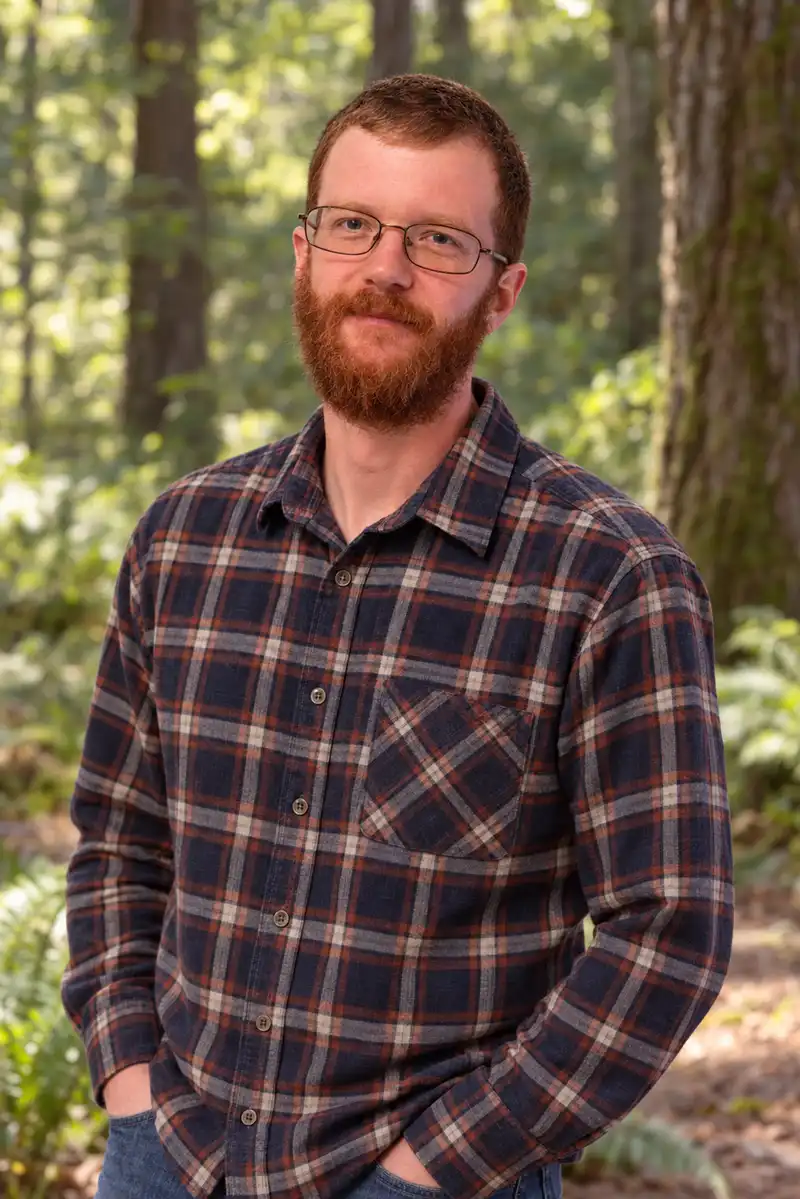
Taylor Guynes
ISA Certified Arborist TX-4334A
- ISA Certified ArboristCertificate TX-4334A, International Society of Arboriculture
- ISA Tree Risk Assessment Qualified (TRAQ)Trained in standardized tree risk assessment methods
- Bachelor of Science in ForestryTexas A&M University
- Master of Public AdministrationUniversity of Texas at Arlington
- Former Municipal Urban Forester and City ArboristManaged public tree programs for a North Texas city
- 10+ Years in North Texas Urban ForestryExperience across nonprofit, municipal, and private sectors
- Community Tree EducationPresenter on native Texas trees for municipal sustainability programs and Master Gardener groups
Certification is verifiable through the International Society of Arboriculture.
What This Work Actually Is
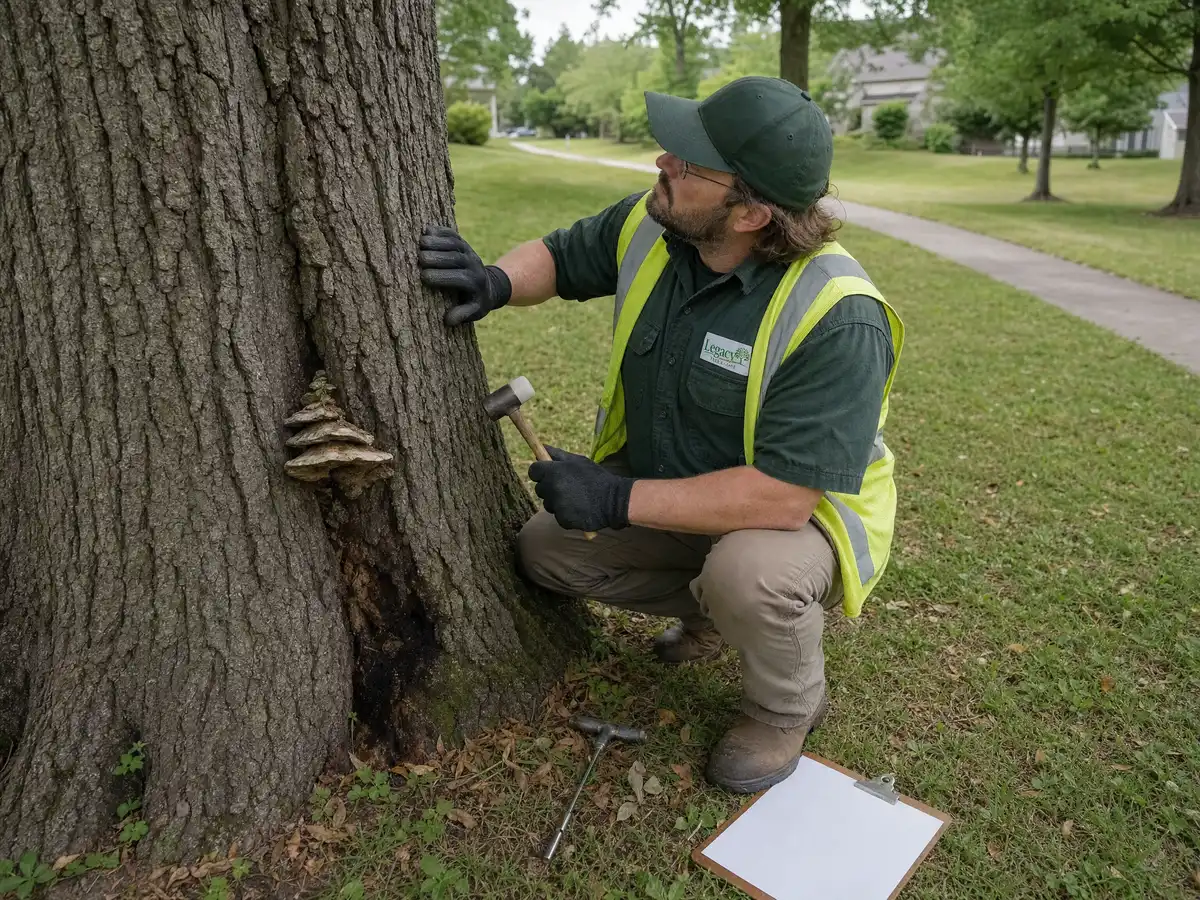
Examining the physical and documentary evidence around a tree, forming a technical opinion, writing it down so somebody outside the trade can follow it, and being prepared to defend each step of the reasoning.
The last part is what makes it different from every other report we write. A condition report is read by people who want it to be useful. An expert report is read by somebody whose job is to find the weakest sentence in it.
Where These Cases Come From
| Dispute | The Technical Question |
|---|---|
| A failure caused injury or damage | Was the failure sudden, or was the condition present and visible beforehand |
| Trees died after construction | What was damaged, when, and is the timing consistent with the work |
| A boundary or neighbor dispute | Where the tree stood, what condition it was in, and what either party could see |
| Work was done badly or without authority | What was done, whether it met accepted practice, and what it cost the tree |
| A protected tree was removed or damaged | What the ordinance required, what the tree was, and what mitigation follows |
What Makes A Report Hold Up
Three properties, and the third is the one most reports lack.
A Stated Basis

What was examined, when, in what conditions, and what was relied on. A conclusion whose basis isn’t stated can’t be tested, which sounds like a strength and is treated as a weakness.
Reasoning You Can Follow

Each step visible, so a reader can disagree with one link rather than reject the whole chain. Reports that leap from observation to conclusion invite the question of what happened in between.
Limits, Named.
What wasn’t examined, what couldn’t be determined, and where the evidence supports more than one explanation. Naming that first is far stronger than having it drawn out later.
The Independence Problem
An expert is retained by one side and isn’t supposed to be an advocate for it, which is a genuine tension rather than a formality.
The way we handle it’s to give the same answer at the outset that we’d give under questioning. If the evidence doesn’t support the position you’re hoping for, you’ll hear that before you’ve spent anything further, and that’s more useful than a favorable early opinion that collapses later.
It also means we decline work occasionally, which is worth knowing about a firm before you retain it rather than after.
What The Evidence Usually Turns On
Two things, and neither is the tree itself.
The first is the failure surface or the physical remains, which frequently answer whether a condition pre-existed. The second is the documentary record: what inspections happened, what was found, what was recommended, and what was done about it.
A party with a consistent inspection history is in a different position from one without, regardless of what the trees were like, because the question in most of these matters isn’t what was true but what was known and what was reasonable to do about it.
Retaining Us Early Is Cheaper
The most common way this work becomes difficult is being retained after the evidence has gone.
Material chipped, a stump ground, a site cleared, a failure surface photographed only from a distance by somebody focused on reopening a lane. All understandable, and all irreversible. Where a matter looks likely to be contested, an examination before clearance costs a fraction of reconstructing it afterwards and produces a far stronger document.
Where that window has already closed, we’ll say what can still be established and what can’t, rather than implying the file is stronger than it is.
The Deposition Is A Different Document
Writing a report and defending one are separate skills, and the second is where technical people most often come unstuck.
The pressure is toward overstating: a question invites a firmer answer than the evidence supports, and agreeing feels cooperative. The discipline is to keep saying what the evidence shows and to keep the qualifications attached, including when that’s less satisfying than the alternative.
An expert who won’t say “I don’t know” has no way to signal when they do know, which is the reason careful reports read as cautious and hold up as strong.
What We Don’t Do
We aren’t attorneys and we give no legal advice. We don’t opine on liability, on duty, or on what a court should conclude, and a technical expert who strays into those is a gift to the other side.
What we provide is the arboricultural question answered properly: what the tree was, what condition it was in, what happened to it, and what accepted practice says about the work done around it.
More On Risk And Documentation
The rest of what a commercial property gets asked to produce, and who asks for it.
- Tree Risk Assessment
- Commercial Tree Inventory
- Commercial Tree Inspection Programs
- Tree Damage And Insurance Claim Documentation
- Recognizing Tree Defects
- Detecting Decay Inside A Tree
- Investigating Why A Tree Failed
- Root Zone And Root Collar Investigation
- Reducing Tree Risk Without Removing The Tree
- Reporting Tree Risk To Owners And Boards
- What Tree Records To Keep
- Catching Up On Deferred Tree Maintenance
- Seasonal Tree Risk
- See All Risk And Documentation Services