

Why The Answer Is Underground
A thinning crown, early color, dieback at the top. These are the symptoms a property notices, and they’re the same symptoms for half a dozen unrelated causes.
On commercial property built in the last few decades, the cause is disproportionately below grade: a root collar buried at planting, roots circling and girdling the stem, compaction from construction or parking, severed roots from a service run, or a grade change nobody recorded. None of those are visible from above and all of them are diagnosable.
Compressed Air, Not A Shovel.
The tool that makes this practical is a supersonic air nozzle, which displaces soil without cutting what’s in it.
That distinction is the whole method. A spade finds roots by severing them, which both damages the tree and destroys the evidence you came to look at. Air removes the soil and leaves the root system standing, so what caused the problem is visible and intact.
It also means the investigation isn’t itself an injury, which matters on a tree already under stress and matters more when the tree is protected and any damage is an ordinance question.
What Gets Found
| Finding | What It Means |
|---|---|
| Buried root collar | Planted too deep or mulched over. The most common finding on trees of planting age, and the one most often correctable |
| Girdling roots | Roots circling the stem, tightening as both grow. Sometimes cuttable before they close, rarely afterwards |
| Severed or crushed roots | A trench, a regrade or repeated tracking. Establishes cause and often the date |
| Compacted soil | Restricted gas exchange. Relievable, and it’ll return if what caused it continues |
| Decay at the flare | A structural finding rather than a health one, and it changes the question entirely |
Three Reasons To Commission One
Only one of them is a tree that already looks unwell.
A Tree In Decline
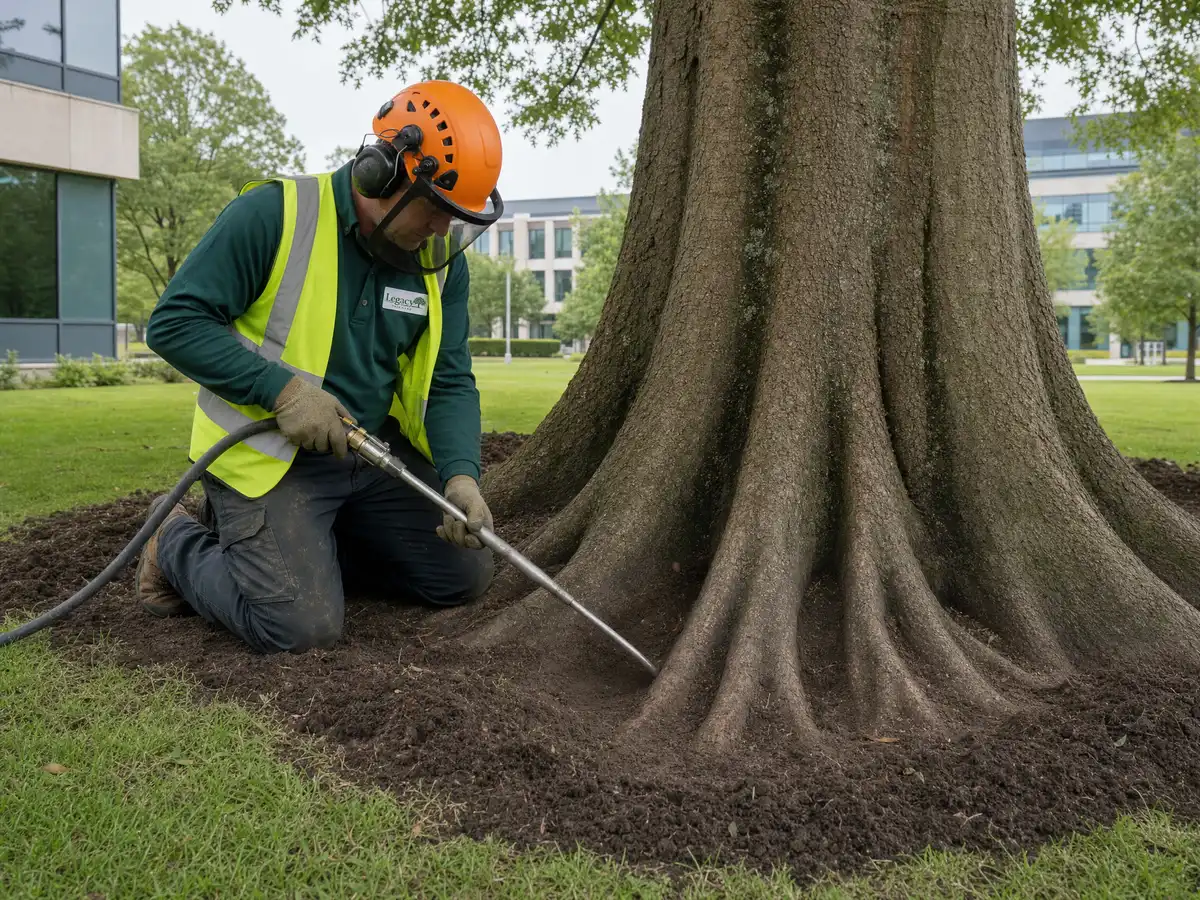
The diagnostic case. Before spending anything on treatment, establish whether the problem is depth, girdling, compaction or something in the crown after all.
Before Building Near It

Knowing where the structural roots actually run lets a trench, a footing or a service route move a few feet and miss them. Guessing is how a preserved tree dies two years after completion.
After Something Happened
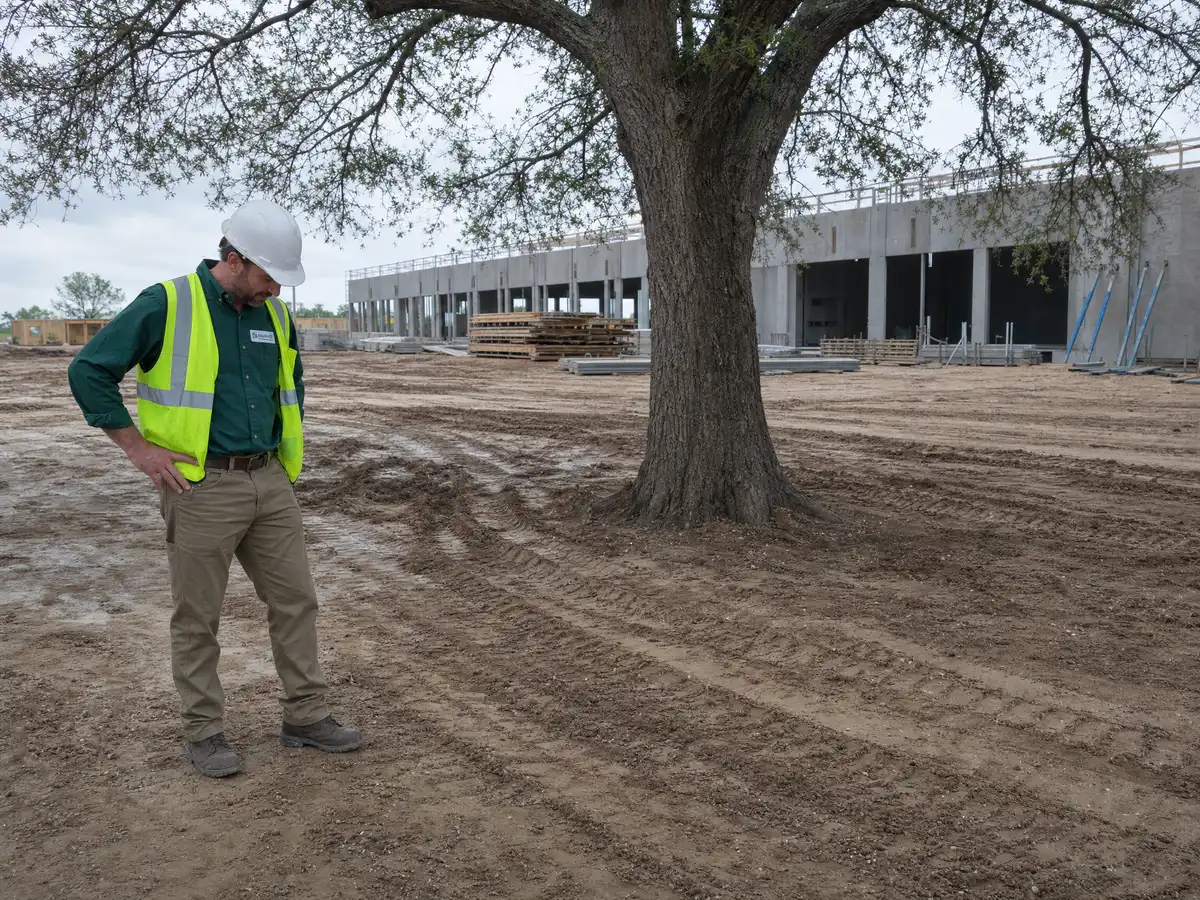
Where work has already gone in near a tree, this establishes what was actually damaged and when, which is the difference between an argument and a record.
What Can Be Fixed And What Can’t Be
A buried collar can be excavated and left exposed, and on a tree not too far gone the response is genuine.
Girdling roots can sometimes be cut, and the judgment is whether removing the root does more harm than leaving it, which depends on how much of the stem it has already encircled. Compaction can be relieved by fracturing the soil and amending it, though it returns if whatever compacted it continues.
Severed structural roots can’t be replaced. Neither can decay at the flare. Those findings move the conversation from treatment to risk, and pretending otherwise wastes a season the tree doesn’t have.
Timing Matters More Than On Most Work
Two windows are worth naming.
The first is before construction rather than after, because a root map lets a design move and a post-mortem doesn’t. The second is early in a decline rather than late, since every correctable finding on this page has a point past which correcting it changes nothing.
The trees where this pays are the ones worth keeping: mature specimens over parking or entrances that nothing you plant will replace inside twenty-five years. On a struggling ornamental in a bed, replacement is usually cheaper than diagnosis, and we’ll say so.
What The Soil Itself Tells You
The excavation exposes more than roots. It exposes the ground they have been trying to live in.
Layered fill from construction, a distinct boundary where topsoil was spread over compacted subgrade, or the original nursery root ball still sitting as a defined block in the surrounding soil years after planting. That last one is common on commercial sites and explains trees that never established: the roots never left the ball they arrived in.
None of that is recoverable from a soil test, which samples chemistry rather than structure, and structure is what most of these trees are limited by.
What You Receive
Photographs of what was exposed, which is unusually persuasive evidence because the cause is visible rather than inferred. Alongside them, what was found, what it explains, what we recommend, and what we’ve ruled out.
Where the finding is construction damage, the record carries a date and a description that somebody else can read, which is frequently worth more than the horticultural conclusion.
More On Risk And Documentation
The rest of what a commercial property gets asked to produce, and who asks for it.
- Tree Risk Assessment
- Commercial Tree Inventory
- Commercial Tree Inspection Programs
- Tree Damage And Insurance Claim Documentation
- Recognizing Tree Defects
- Detecting Decay Inside A Tree
- Investigating Why A Tree Failed
- Reducing Tree Risk Without Removing The Tree
- Reporting Tree Risk To Owners And Boards
- Arborist Expert Witness And Litigation Support
- What Tree Records To Keep
- Catching Up On Deferred Tree Maintenance
- Seasonal Tree Risk
- See All Risk And Documentation Services