

The Window
The instruction from the guidance is short enough to quote and specific enough to schedule against.
All wounding of oaks, including pruning, should be avoided from February through June. The least hazardous periods for pruning are during the coldest days in midwinter and extended hot periods in mid to late summer.
That gives a commercial property two usable windows and one to stay out of. Note that the safe periods are described as the coldest days and the extended hot spells rather than whole seasons, which is a narrower instruction than “prune in winter” and matters in a North Texas January that can run to seventy degrees.
Why Those Months
The window isn’t arbitrary, and understanding it prevents the usual argument about whether a mild spring changes anything.
Fungal mats form on diseased red oaks in late fall and especially in spring. They produce a fruity odor that attracts sap-feeding beetles. Those beetles emerge from the mats and visit fresh wounds on healthy oaks, carrying spores with them. Fresh wound plus active beetle equals new infection.
February through June is when both halves of that are in play. Individual mats produce spores for only a few weeks, and infections in late spring and summer usually don’t give rise to mats at all because high temperatures and low soil moisture suppress them. The window closes because the vector supply dries up, not because the trees change.
What Counts As A Wound
More than pruning, and this is where commercial property differs from a garden.
The guidance lists freshly-cut stumps and damaged surface roots alongside pruning cuts as wounds requiring immediate treatment. On a working site, most oak wounds aren’t made by a pruning crew at all. They come from mowers and string trimmers against the base, from vehicles clipping low limbs at a dock or a drive-through, from utility and irrigation trenching through the root plate, and from construction hitting surface roots.
None of those are scheduled, which means none of them respect the window. It also means the crews causing them are usually not the crews who know about it. A landscape maintenance contractor who mows a campus weekly is producing oak wounds year-round without anybody logging one.
Paint Every Wound, Every Season.
This is the instruction most often skipped, and the guidance allows no seasonal exception.
Regardless of season, all pruning cuts or other wounds to oak trees, including freshly-cut stumps and damaged surface roots, should be treated immediately with a wound or latex paint to prevent exposure to contaminated insect vectors.
Two words carry the weight. Regardless, meaning the summer window is safer but not exempt. And immediately, meaning at the time of cutting rather than at the end of the day, because the exposure begins as soon as the cut is made.
This is worth putting in writing in a maintenance specification, because wound painting on oaks is a step that quietly disappears from a crew’s routine unless somebody names it.
Building It Into A Contract
Three things that turn the guidance into something enforceable rather than aspirational.
Schedule Oaks Separately
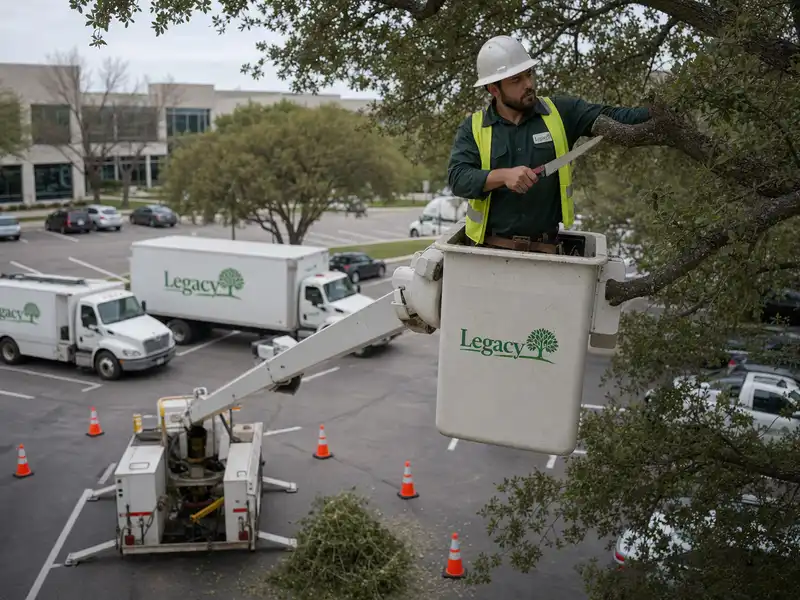
A single site-wide pruning date will fall inside the window sooner or later. Oaks need their own line on the calendar, in winter, so the timing survives a change of contractor.
Name The Paint Requirement

Write wound painting into the specification, applying to stumps and damaged roots as well as cuts, and applying year round. Unwritten steps stop happening when the crew changes.
Control Cleared Material
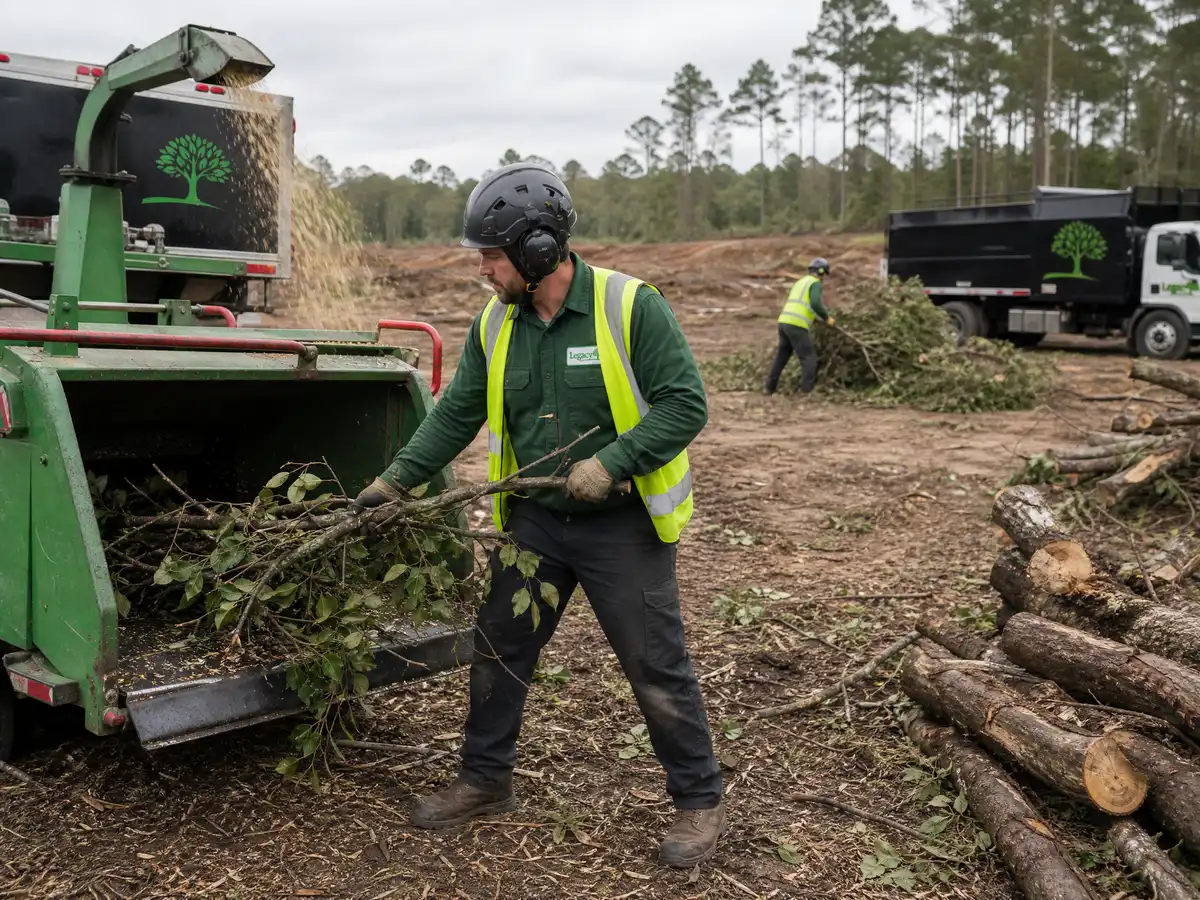
Oak wood from an unknown source, stacked unseasoned beside healthy oaks, is a mat farm. Where it goes and how long it stays are contract terms, not housekeeping.
Firewood And Cleared Wood
The guidance devotes real attention to this, and it applies to commercial sites more than people expect.
Transporting unseasoned firewood from diseased red oaks is named as a potential means of spreading the fungus. Burning infected firewood doesn’t transmit it, but fungal mats may form on unseasoned firewood in storage. Diseased wood from any oak species should never be stored near healthy oaks unless precautions are taken.
The specific recommendations are to buy wood that has been thoroughly dried for at least one full year, to burn all firewood before spring, and where unseasoned wood of unknown origin must be stored near healthy oaks, to cover it with clear plastic and bury the edges of the plastic so insects can’t leave the pile.
On a commercial property this usually isn’t firewood at all. It’s a pile of cut material from last month’s work sitting behind a building for a few weeks because nobody scheduled the haul-off, in some cases directly beneath the oaks it came from.
When The Window Can’t Be Respected
Sometimes the work genuinely can’t wait, and pretending otherwise helps nobody.
A limb over a fire lane, a failure hanging above a parking row, storm damage in April: those are hazards now, and a hazard outranks a seasonal preference. The guidance doesn’t tell you to leave a dangerous tree alone until July.
What it does tell you is that the wound gets painted immediately, that the exposure is real, and that any oak wounded inside the window is worth watching afterward. The rule is a default to schedule around, not a prohibition to hide behind. Deferring genuine hazard work for six months creates a liability that’s considerably easier to prove than a fungal infection.
How We Handle It
Oak work on the properties we maintain goes into the winter schedule by default, and where something has to happen inside the window we say so in advance and explain why, rather than quietly doing it.
Wounds get painted at the time of cutting, including stumps and any roots we damage. Cut oak material leaves the site rather than sitting behind the building. And we call 15 to 30 minutes before we arrive, which on a scheduled winter visit mostly means nobody has to wait around for a crew that could turn up at any point in a four-hour range.
More On Oak Wilt
One disease, four decisions: what it looks like, what stops it, when to cut, and what it does to a whole canopy.